Do Tattoos Hurt? Introducing Painful Areas and Ways to Make Irezumi Less Painful
2023/10/15
2026/02/27
2026/02/27



タトゥーを入れたいけど、タトゥーの痛さが心配でなかなか一歩が踏み出せない。なんて方は多いのではないでしょうか。
また、なんでわざわざ痛いことをするのか、と不思議に思う人も少なくはないでしょう。
However, just like the famous saying “No pain, no gain,” pain is something you cannot avoid when getting a tattoo.
This time, we will introduce tattoo pain, painful areas and less painful areas, and ways to ease the pain as much as possible!
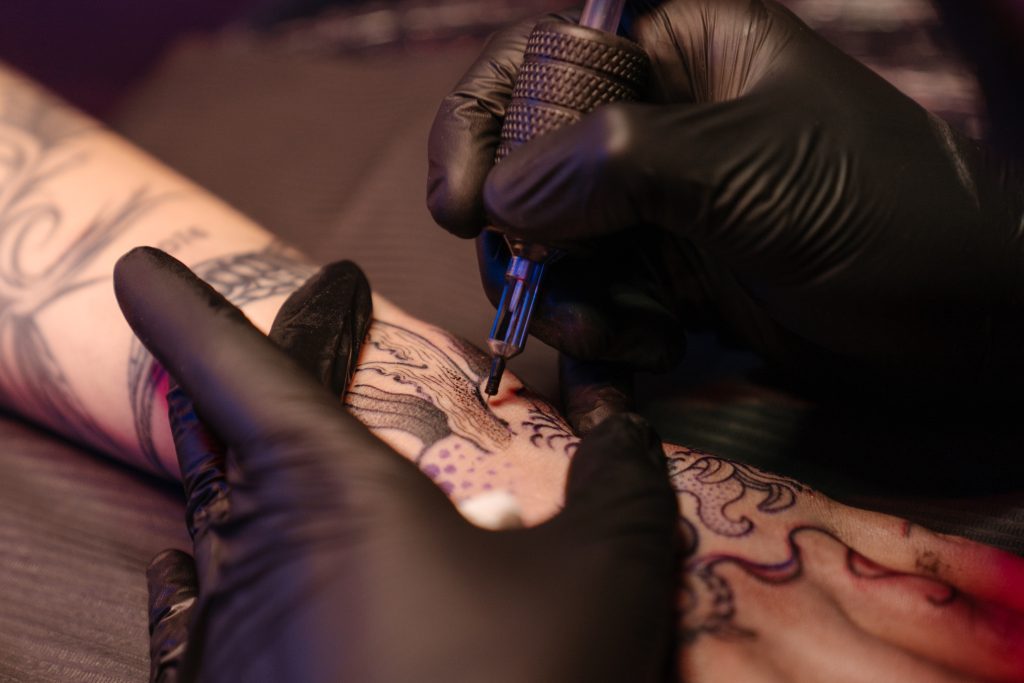
As mentioned at the beginning, tattoos hurt, although it varies depending on the placement and the person.
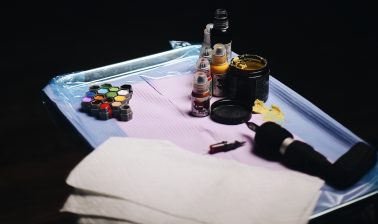
Generally, tattoos are done using a machine called a tattoo machine. Simply put, a tattoo machine inserts ink by rapidly piercing the body with needles coated in ink.
In other words, because the needles are piercing the body, it hurts when you get a tattoo.
Common ways people describe tattoo pain include:
However, don’t those feel quite different in both sensation and intensity? On social media, people use all kinds of different expressions.
There are two main reasons for these differences: individual differences, and differences in the tattooing process.
Individual differences mean, for example, that someone getting their first tattoo and someone who has gotten many tattoos will feel it differently due to familiarity. Also, how easily you feel pain changes depending on gender differences and your physical condition that day. In other words, pain perception changes based on each person’s condition.
As for the tattooing process, we will explain it below by dividing it into two major parts.
When tattooing, the artist first tattoos lines such as the outline of the stencil as a guide. This outline process is called linework.
During linework, in many cases, the artist uses a bundle of about 1 to 5 needles. Because a small number of needles are concentrated in one spot, the sensation can feel like being scraped with a mechanical pencil or a cutter. Since the machine’s force is concentrated in one place, some people say linework hurts the most.
After the lines (outline) are done, the inside is filled in. The techniques used to fill are called shading and packing.
Shading is a technique that creates depth by adding gradients with different ink densities inside the outlined area. Packing also fills the outlined area, but unlike shading, it fills without gradation.
In shading and packing, more needles are used than in linework.
So from the flow so far, it may sound easier than linework, but it has a different kind of pain.
With linework, you move along the stencil line and tattoo different parts one after another. But with shading and packing, you may tattoo the same area many times. In other words, needles may pierce skin that has already been damaged by previous passes. The sensation can feel like being rubbed with sandpaper, and some people feel this hurts more.
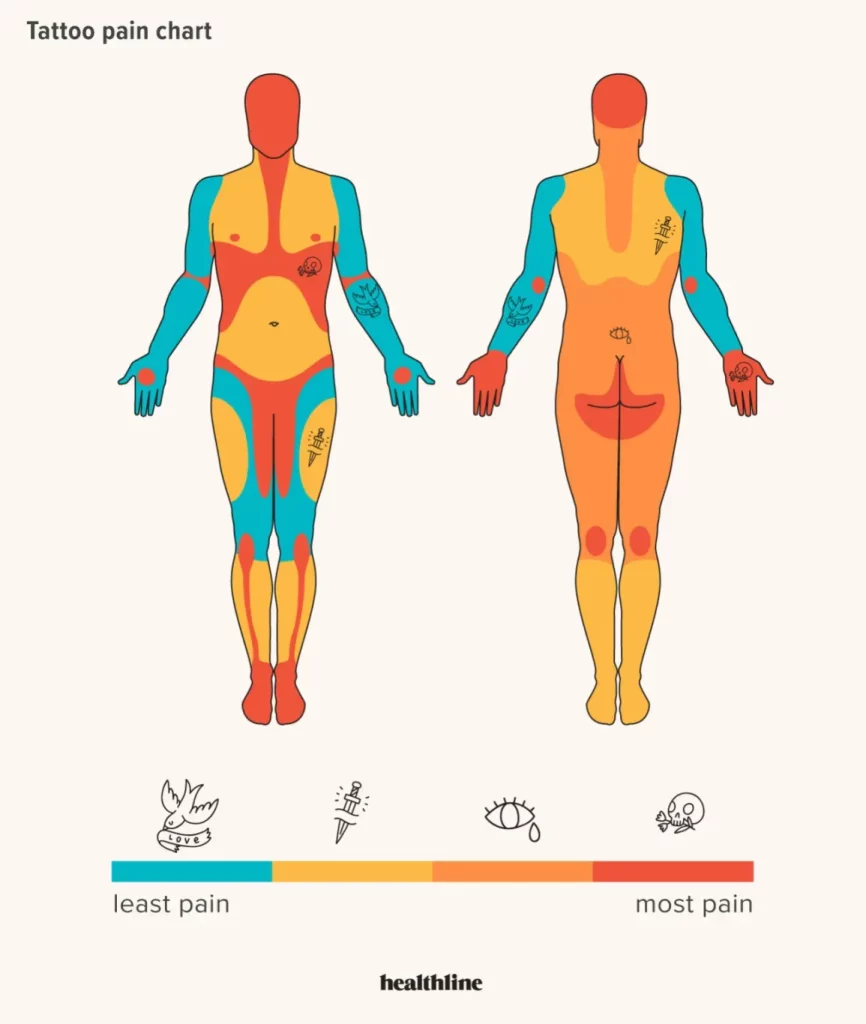
You may actually want a tattoo, but still worry, “Will it hurt to tattoo this area?”
For those people, below we will introduce some areas that are generally said to be painful and areas that are said to be relatively less painful. Also, the image above shows pain intensity by placement using color coding. Please use both as references to estimate how much the area you want might hurt!
The armpit is said to be painful because the skin is thin. Also, many nerves pass through it, so the pain can be stronger than in other places.
The head is also said to be painful because many nerves pass through it. In addition, it has almost no fat, so the vibration of the tattoo machine can travel through the bone, making it a place where people may also feel fear more easily.
Feet and ankles are also said to be painful because there is very little fat and the skin and bone are very close.
We introduced a few areas that are said to be painful, but changing the placement and compromising just because it hurts can become a source of regret, so be careful. A tattoo is for life, so make a choice you won’t regret!
There is no place that is completely painless, but there are places where pain tends to be less intense.
The arm tends to build muscle and fat, and it is not an area where nerves are densely concentrated. So it usually does not cause strong pain and can be said to be an ideal area for a first tattoo. However, the elbow and inside of the elbow are sensitive areas where the bone is close and there are many nerves, so beginners in particular should avoid them.
The calf is also said to be relatively less painful because it has plenty of fat and muscle and nerves are not concentrated. However, just like with the arm, the back of the knee has many nerves and tends to be very painful, so caution is needed.
Also, the back is said to be an area that does not hurt much as long as you avoid bony parts such as the spine and ribs.
As mentioned at the beginning, you cannot get a tattoo completely pain-free. Also, while a one-coin-size tattoo can be finished in around an hour, it can take much longer depending on the size and complexity of the design. So for several hours, you basically have to endure the pain until the design is completed.
However, there are ways to make long tattoo sessions feel easier.
So from here, we will introduce methods to reduce tattoo pain.
To ease tattoo pain, it’s important to prepare not only during the session, but also beforehand.
First, avoid drinking alcohol the day before and the day of, and get good sleep. Also, eat before your session and avoid being hungry.
Simply put, go in with your condition in good shape. Once you actually get tattooed, you’ll realize that enduring the pain takes a lot of stamina.
This is because your body needs energy to produce adrenaline, which has a pain-relieving effect. So if you go in hungry or sleep-deprived, you might find it hurts more than expected.
Also, some people may want to use numbing cream or painkillers because they are worried about pain. However, never use them on your own.
Side effects from numbing creams or painkillers may affect the session. At the very least, we recommend consulting your tattoo artist beforehand.
During the session, first try to stay relaxed. If you hold your breath out of fear or tense up, you may feel pain more easily, or you may put extra strain on your body through mild oxygen deprivation.
To relax, it is recommended to distract yourself by talking with the artist, listening to music, or watching videos.
Also, as mentioned above, enduring pain uses stamina, so taking in sugar—such as sucking on candy—is also considered a pain countermeasure.
And if the session is long, fatigue can build up and you may feel the pain more strongly. If you can’t endure it, don’t be embarrassed—tell your artist and take a break.
For people getting their first tattoo, pain is probably especially scary. And in reality, tattoos do hurt to some extent.
However, if the pain were unbearable, there wouldn’t be so many people around the world with multiple tattoos all over their bodies. In other words, for most people it is pain they can endure, and tattoos have an appeal that outweighs that pain.
Changing the placement because “I heard this spot hurts,” can also become a source of regret. So don’t compromise—get the design you want in the place you want!