Hanafuda Tattoos Have Meanings – Introducing Ino-Shika-Cho and Designs for Women Too
2024/03/11
2026/02/25
2026/02/25



In this article, Hanafuda is highly popular as a lucky motif because of the beauty of its artwork and its image of gambling and gamblers.
In this article, we will introduce the meanings of Hanafuda tattoos and design examples!
Hanafuda features many beautiful designs such as pine, peony, and cherry blossoms, but in fact, each card is assigned one of the months from January to December. And the designs depict plants and animals that represent each month.
Here, we will pick up some of the representative ones and introduce them!
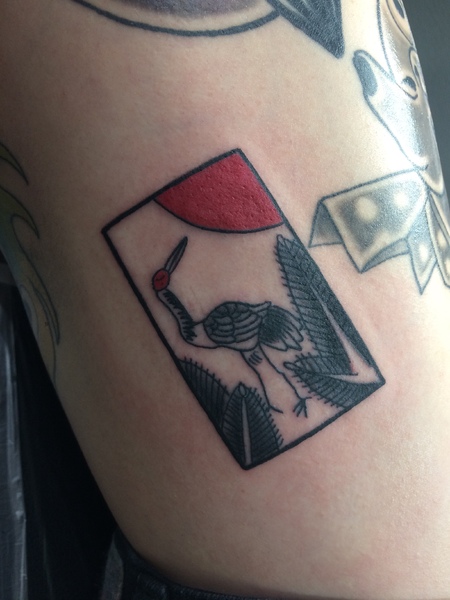
The high-point card for January features “Crane and Pine.”
Because pine stays green and lush throughout the year, it is said to be an auspicious motif meaning “eternal life.”
Also, the crane depicted together with it is said to represent “longevity,” linking its white feathers with long-lived people.
In other words, this card carries the meaning of wishing for a long life.
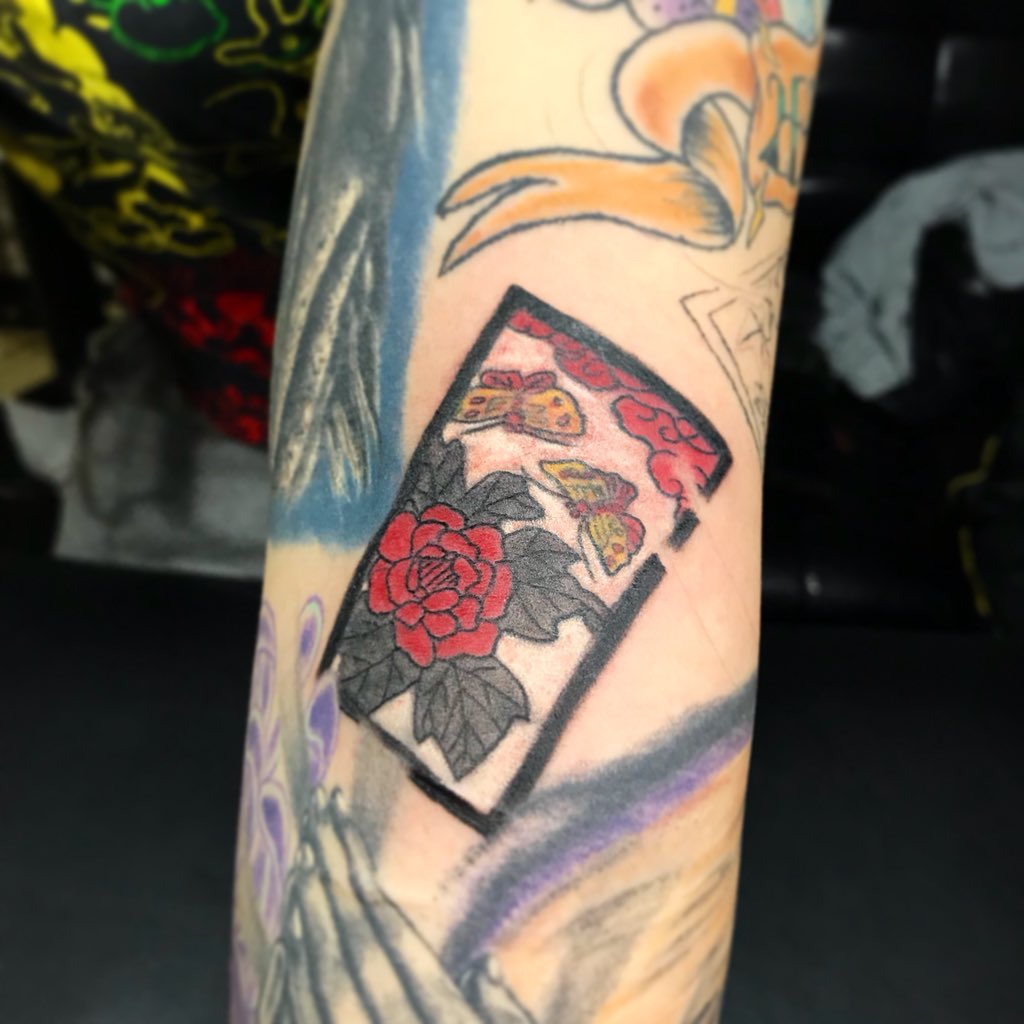
The high-point card for June features “Butterfly and Peony.”
Peony is not only beautiful, but also has meanings of immortality and longevity because the character “丹 (tan)” in peony (牡丹) refers to an elixir of immortality.
Also, because a butterfly is reborn into a beautiful butterfly after going through the chrysalis stage, it is considered a symbol of revival and immortality.
Not only that, “peony and butterfly” has long been favored as an auspicious and visually gorgeous combination.
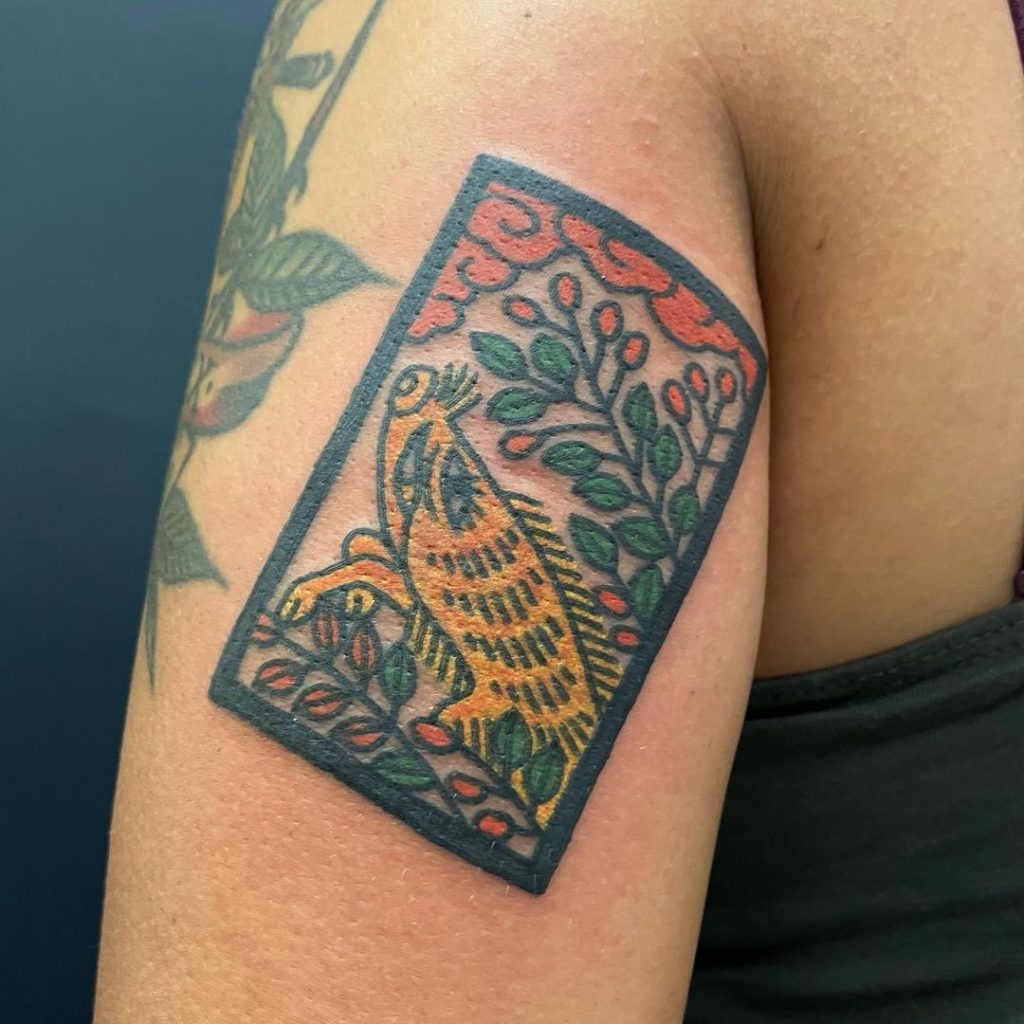
The high-point card for July features “Boar and Bush Clover.”
Bush clover has long been considered in Japan to have the power to ward off evil.
And the boar has an aspect in Buddhism as a messenger of a god of war.
Therefore, this card has meanings such as praying for victory in battle and wishing for peace.
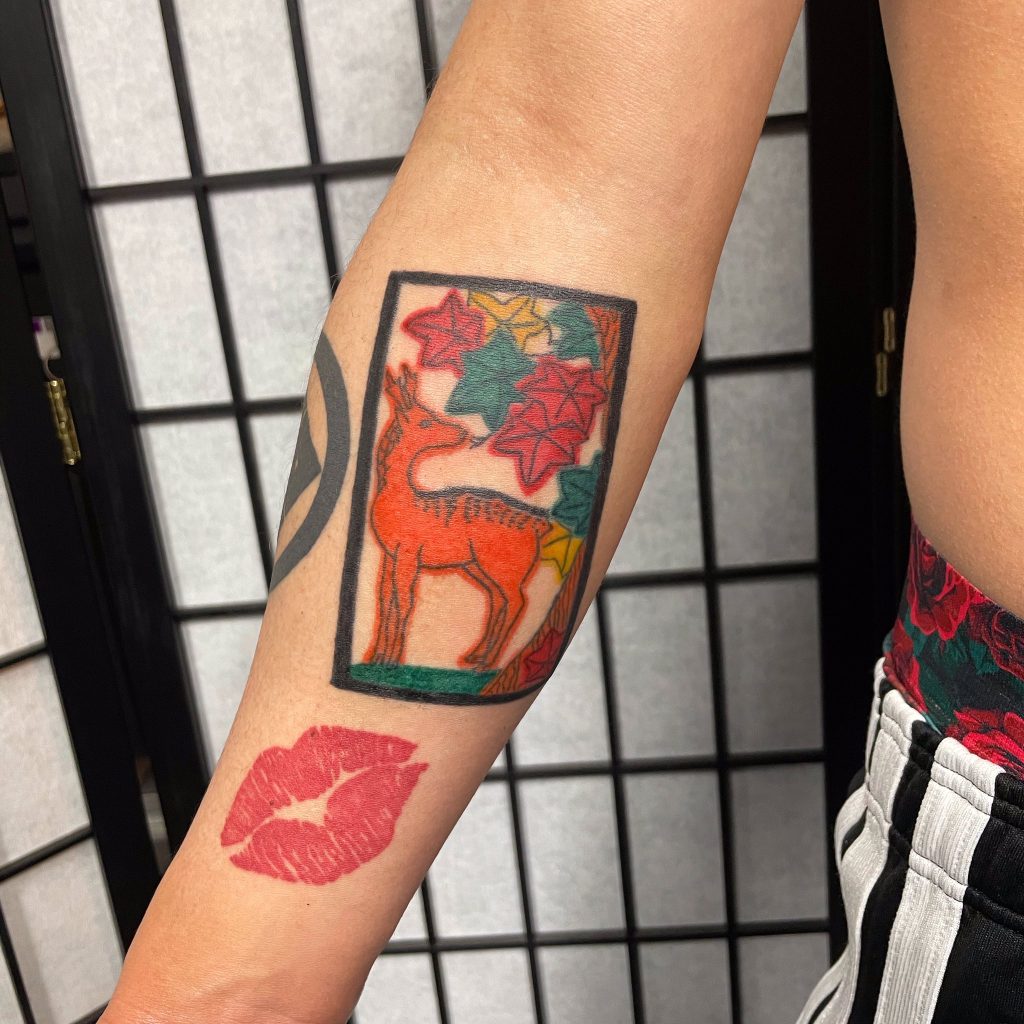
The high-point card for October features “Deer and Maple Leaves.”
As shown in the idiom “deer and maple leaves,” it represents beautiful scenery or things that pair well together.
Besides that, because both deer antlers and maple leaves change in regular cycles every year, meanings such as change and the seasons can also be considered.
Also, it is said that the Japanese word “shikato suru (to ignore)” actually comes from this design.
From here, we will introduce tattoo design examples featuring Hanafuda motifs!
Hanafuda has many different patterns, so please look for a design example of the artwork you like.
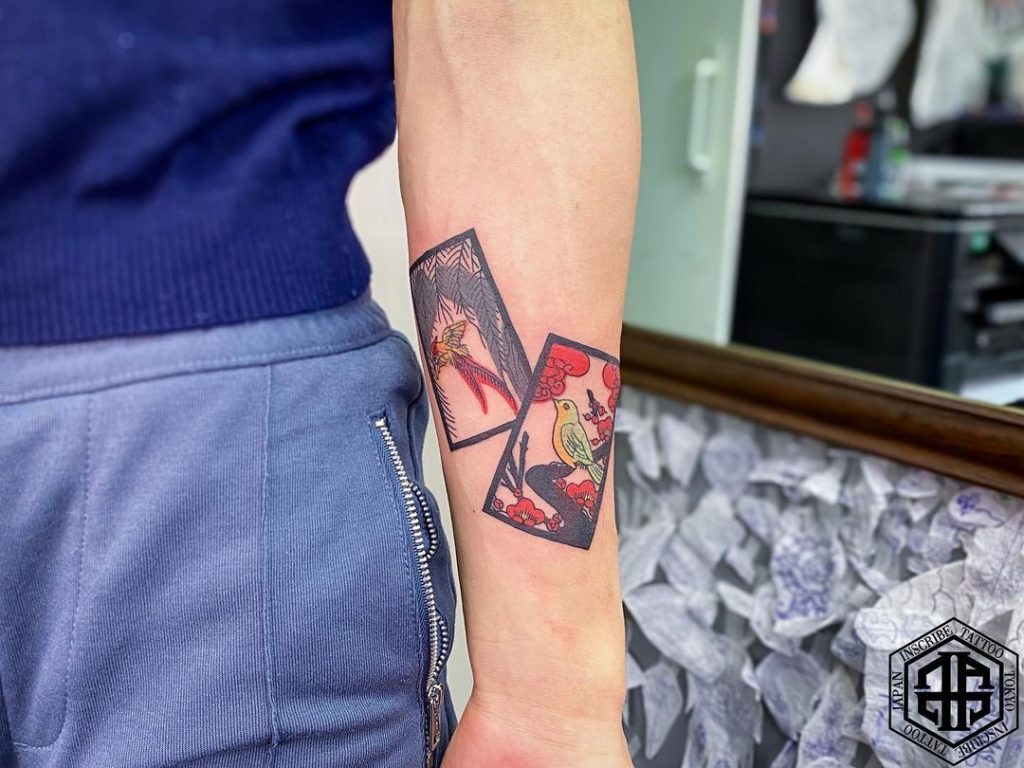
This is a design example with the February card “Bush Warbler and Plum” and the November card “Swallow and Willow” tattooed on the arm.
“Bush Warbler and Plum,” like “Deer and Maple Leaves,” represents things that harmonize beautifully and things that get along well.
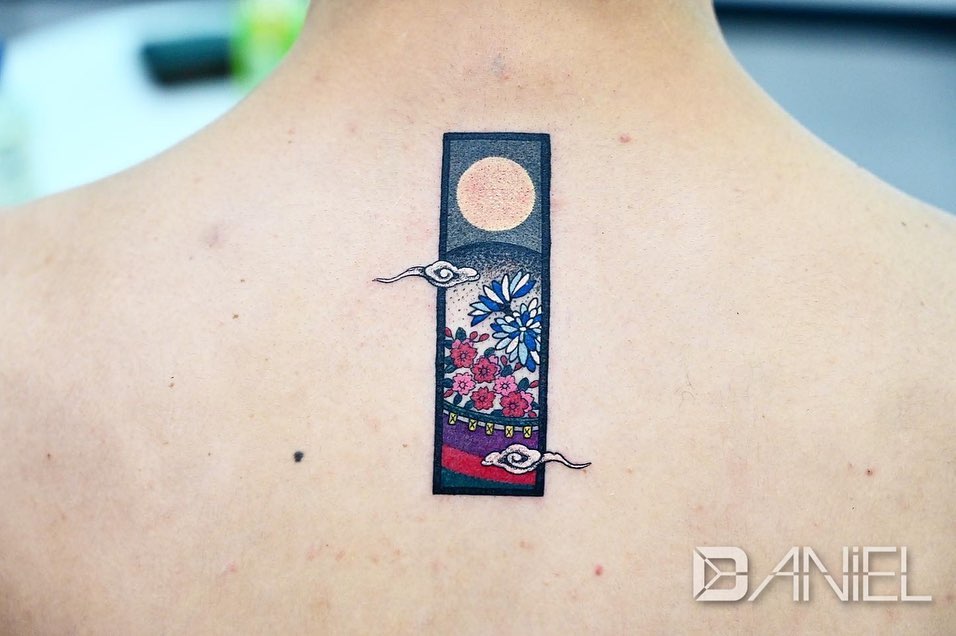
This is a tattoo design in which Hanafuda motifs such as cherry blossoms, chrysanthemums, and pampas grass with the moon are drawn in a tanzaku-shaped frame.
It may also look beautiful to mix in flowers that are not found in Hanafuda.
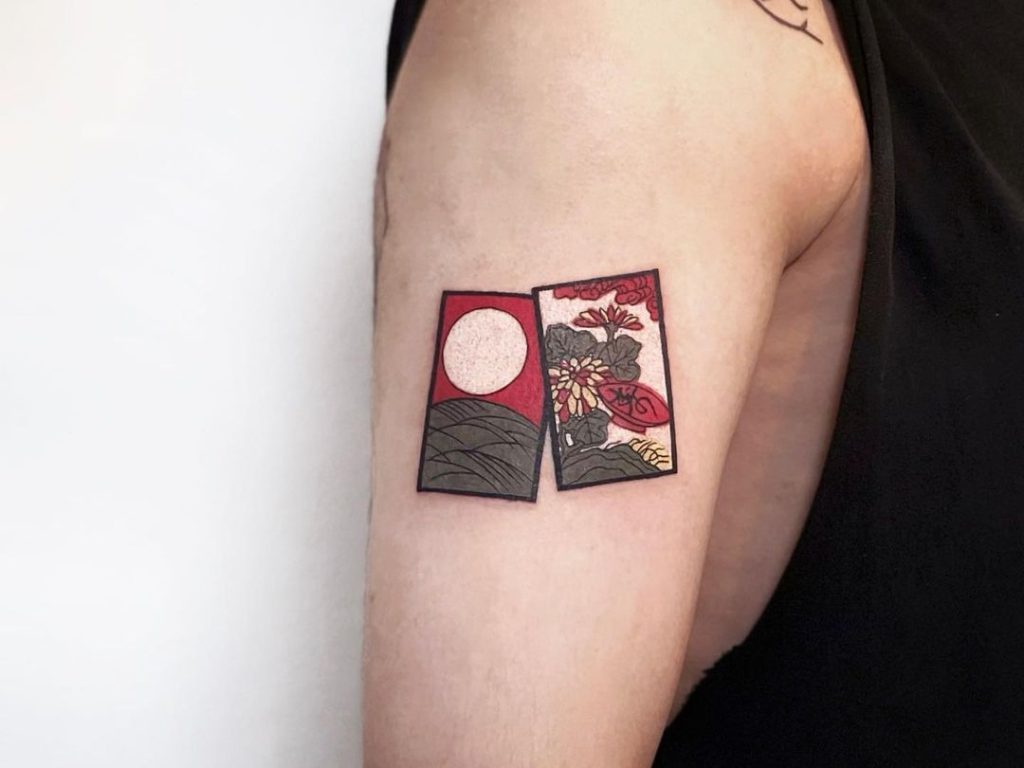
In this design, pampas grass with the moon and chrysanthemums with a sake cup are depicted.
These are the two cards that make up the Hanafuda hand “Tsukimi de Ippai (Moon Viewing with a Drink),” making it a perfect combination for the moon-viewing season as well.
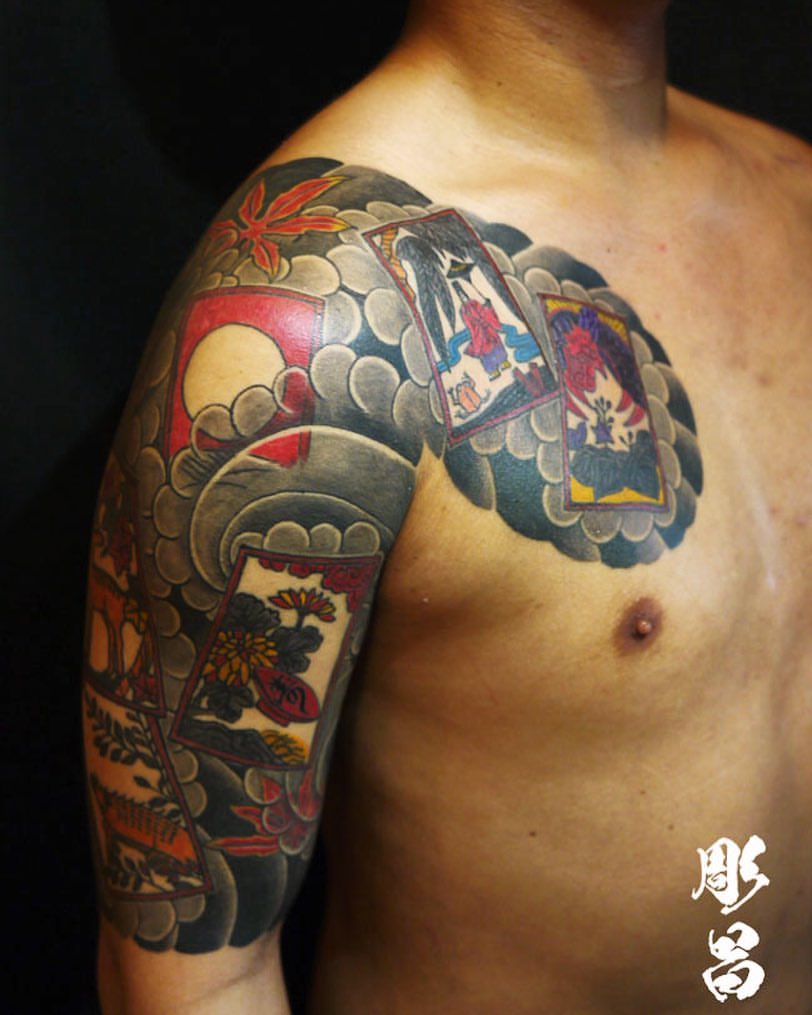
This is a tattoo design with various Hanafuda cards drawn together with shading from the taiko area to a half sleeve.
By combining Hanafuda motifs with a Japanese tattoo composition, it gives an impression like a gambler.
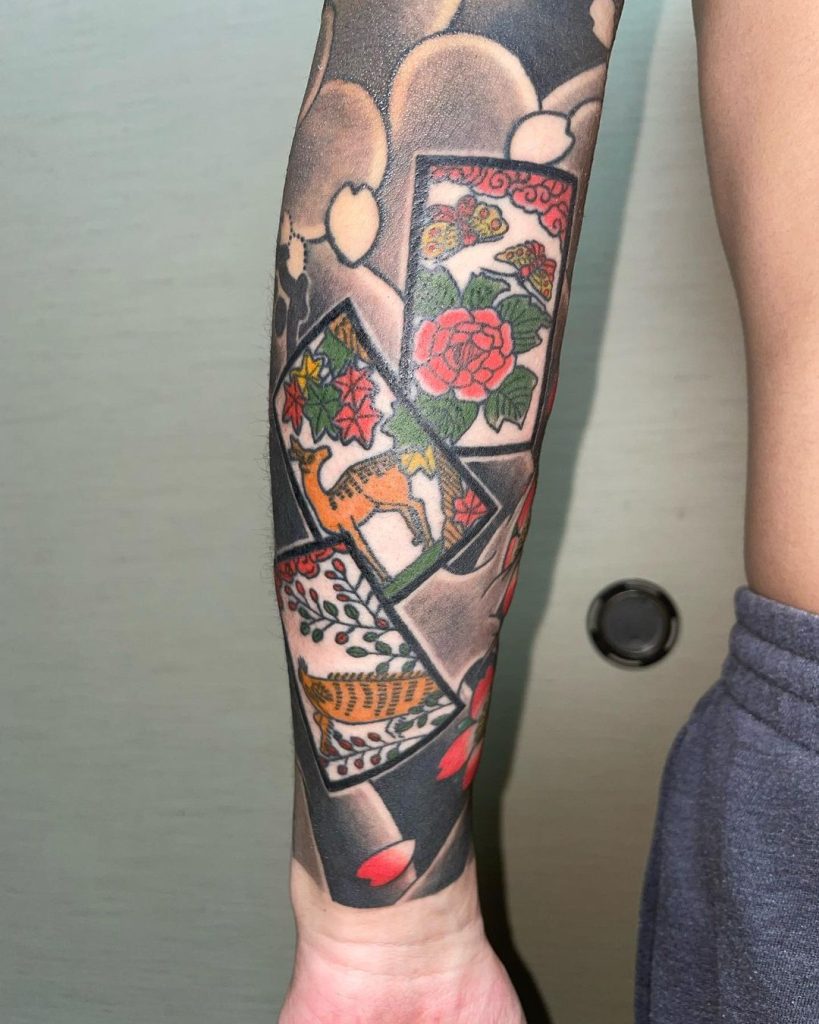
This is a design example of an Ino-Shika-Cho tattoo.
This design, made up of the three cards boar, deer, and butterfly, has top-level name recognition in Hanafuda and is known as a representative auspicious combination.
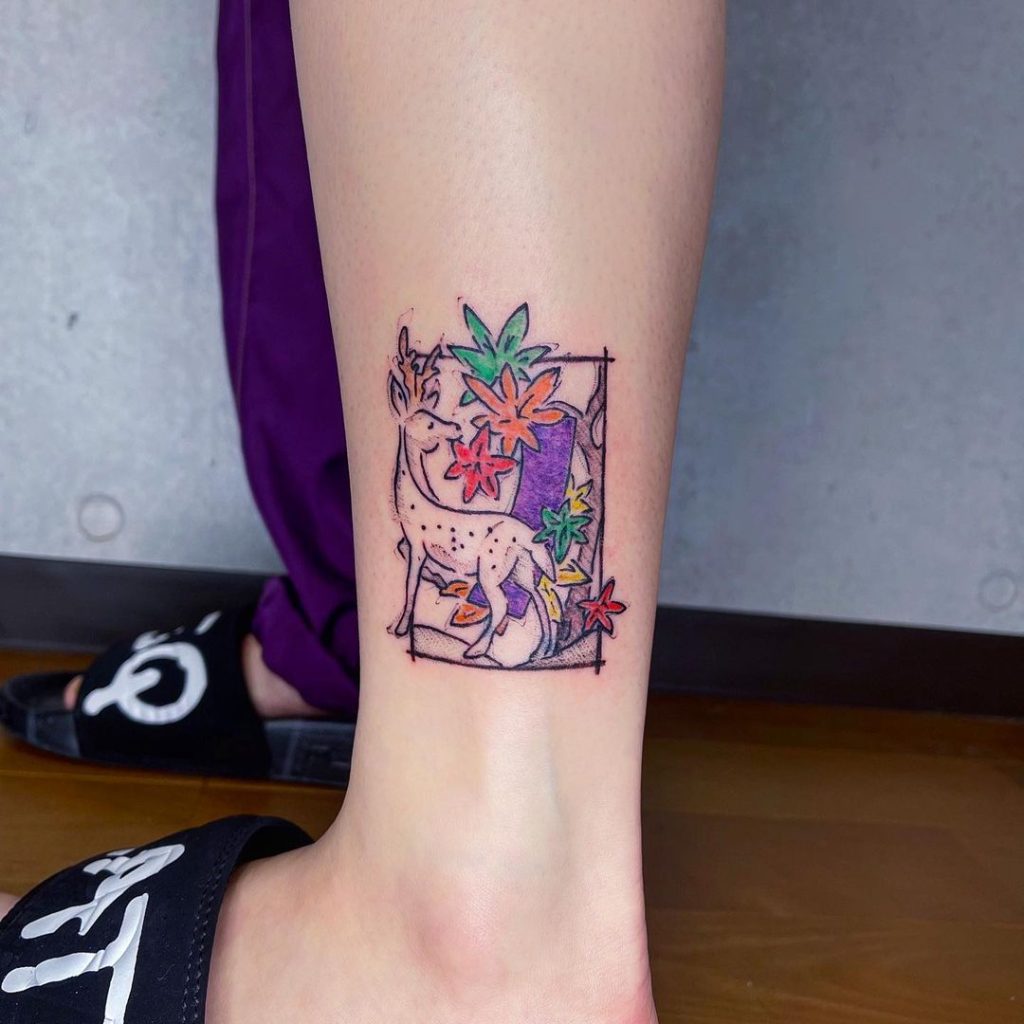
This is a design example of a tattoo with “Deer and Maple Leaves” drawn in an illustration style.
Even with tattoo designs featuring the same Hanafuda motif, simply changing the way it is drawn completely changes the impression.
This design uses Hanafuda motifs such as the moon and chrysanthemums in a tattoo while adding arrangements to each card.
Just using Hanafuda designs as a base gives it a Japanese-style impression.