What Is a Cover-Up Tattoo? How to “Remove” a Tattoo with Another Tattoo
2023/11/04
2026/02/26
2026/02/26



There are many reasons why people want to change a tattoo, such as it not turning out as expected, it bringing back bad memories, or getting tired of an old tattoo.
A cover-up is one method that can make those wishes come true.
In this article, we will explain broadly what a cover-up is, how to tell whether a tattoo can be covered up, pricing, and more.
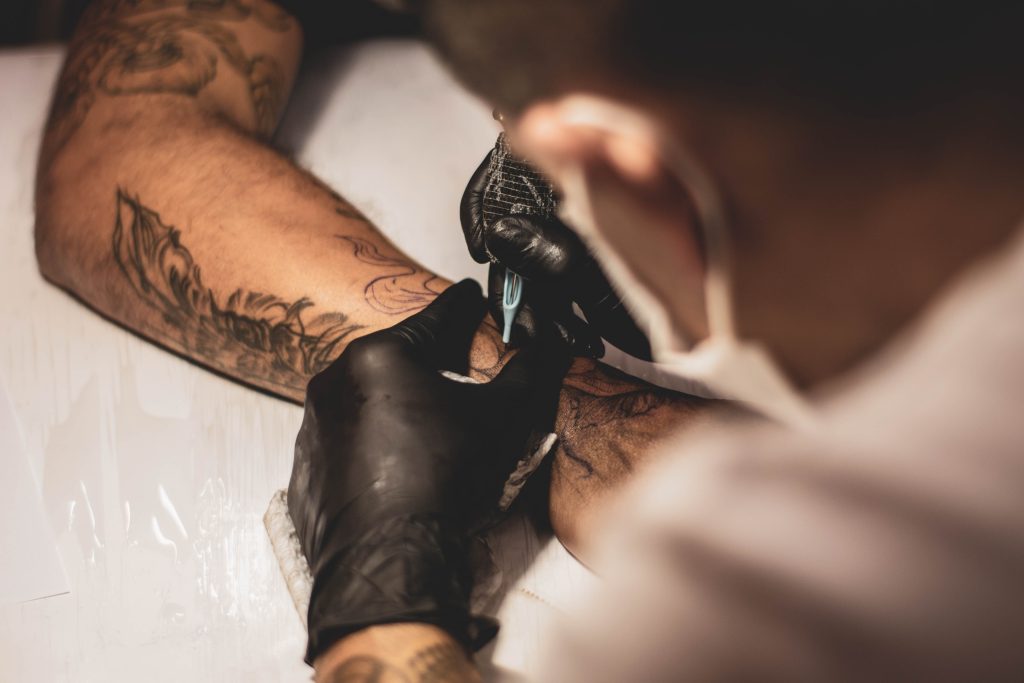
A cover-up refers to tattooing a new design over an existing tattoo, making the old tattoo part of the new design (remaking it), or hiding the old tattoo.
And the newly tattooed piece is called a cover-up tattoo.

Why do people hide or remake a tattoo they already got?
There are many possible reasons, but a few examples include the following.
As you can see, there are as many reasons to get a cover-up as there are people. However, how easy it is to cover up depends on the original tattoo and the cover-up tattoo design.
For example, if bright colors such as blue or green have faded over time, they can be covered more easily than with a brand-new solid black tattoo.
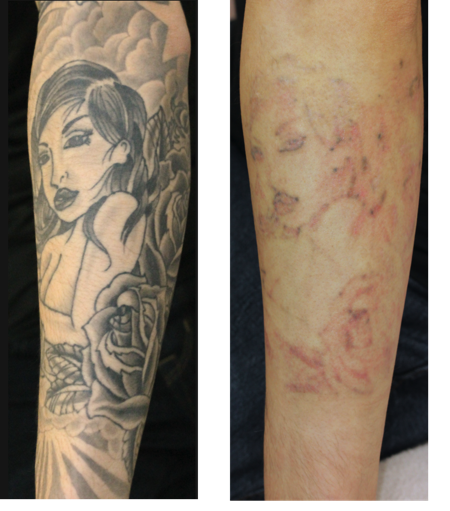
Also, depending on the tattoo’s color and condition, it may be easier to do a cover-up if you first lighten the tattoo through laser removal.
To cover up a tattoo, you should understand that the final result depends on the condition of the original tattoo, and that cover-up tattoos are not万能 (not a perfect solution for every case)!
When you start to dislike your current tattoo for some reason, you will likely struggle between two options: covering it up or removing it.
To give the conclusion first, the best method depends on your purpose.
If you started disliking your tattoo due to reasons such as work or family, even if you do a cover-up, it only adds a new tattoo on top and nothing fundamentally changes.
So if you dislike the tattoo itself, laser removal is recommended, and if you dislike the tattoo design, a cover-up is recommended.
If you want to deal with a tattoo temporarily for events such as weddings, hiding it is also recommended.
Simple methods include covering it with base makeup such as foundation or concealer, or hiding it with accessories.
However, makeup may not hide it perfectly, and even with accessories, the tattoo may become visible at the wrong moment if it shifts.
So we recommend a product made specifically for covering tattoos, called “Hadakakushi Sheet”!
Hadakakushi Sheet lets you choose from four skin tones to match your own skin tone, allowing you to hide it naturally without looking strange.
It is also waterproof and can be kept on for up to one week, so it can be used for pools and hot springs as well!
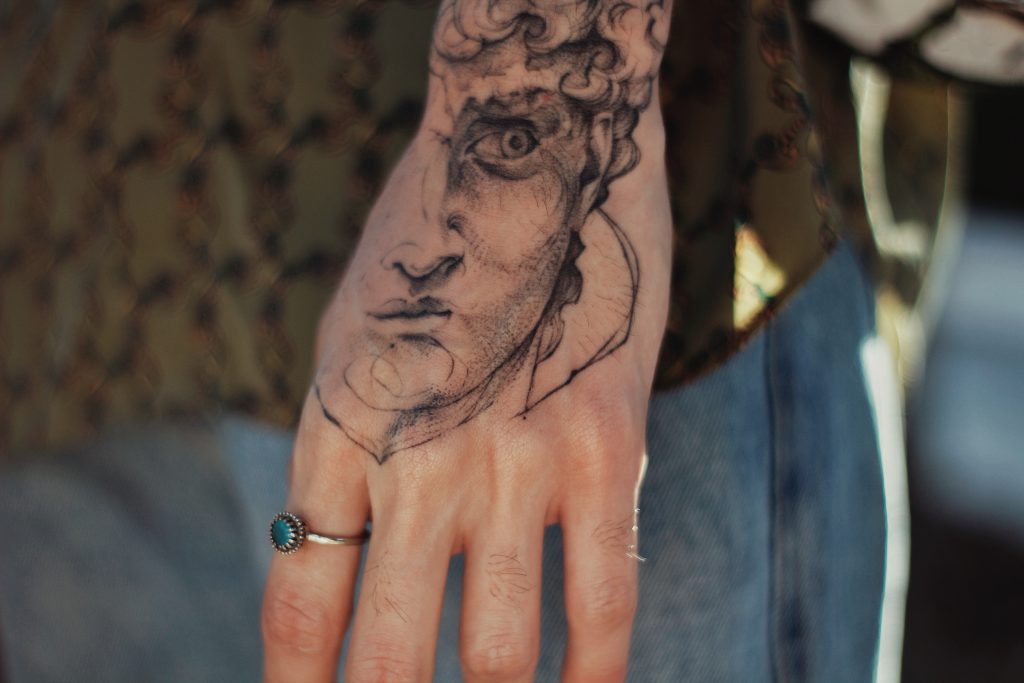
As briefly mentioned in the section on reasons, there are several factors that affect cover-ups.
When considering a cover-up, be sure to keep the following points in mind!
The size of the existing tattoo determines the minimum size of the cover-up tattoo. To cover the old tattoo, even the smallest cover-up needs to be about the same size as the original tattoo.
For example, if you are covering a tattoo about the size of a 500-yen coin, the cover-up tattoo will need to be at least about the same 500-yen-coin size, and it may become even larger.
Bright-colored tattoos are easier to hide than dark-colored tattoos.
On the other hand, if the tattoo is very dark, or if the original piece uses many colors, it may become more difficult to cover up.
Older tattoos tend to become easier to cover because ink fades and lines blur over time.
For example, it may be more difficult to hide a small, recent black tattoo than a large, bright-colored tattoo that was done 20 years ago.
Complex tattoo designs are harder to cover compared to simple tattoo designs.
For example, it would be difficult to hide a pet portrait tattoo with a simple tribal tattoo.
However, on the other hand, it is relatively easy to hide a very simple line tattoo with a complex design like a portrait tattoo.
A tattoo artist’s amount of experience with cover-ups greatly affects the quality of the result.
Unlike a normal tattoo session, a cover-up requires placing a new tattoo while considering the original tattoo’s design and colors.
So for example, if the artist does not choose ink colors based on the old tattoo’s colors, the old tattoo may show through.
If you want a cover-up, be sure to consult a tattoo artist who has experience doing cover-up tattoos!
The price of a cover-up tattoo varies depending on many factors such as size, color, and level of detail, just like a regular tattoo.
However, because it generally involves overwriting the original with a larger design, very small sizes are rarely used, and the average price tends to be higher.
Also, compared to tattooing new ink on blank skin, the burden on the artist is greater, such as incorporating the original design or choosing colors so the old tattoo does not show through.
Therefore, in most cases, cover-up pricing is set higher than standard tattoo work.
For details on pricing and fees, we introduce them in the article below.
From here, we will answer common questions about cover-up tattoos.
We hope this can help answer your questions, even a little.
It is very difficult to cover a black tattoo with colors other than black. Imagine stained glass: even if you layer another bright stained glass color on top of black stained glass, the black behind it will still show through strongly.
Tattoo cover-ups are similar, and even if you put bright colors on top, the old black ink will show through.
If you absolutely want to add bright new colors, it would be better to first lighten the original black with laser tattoo removal.
If you got a new tattoo but it looks totally different from what you imagined, you will want to cover it up right away.
However, right after getting a tattoo, it is basically an open wound, so you cannot do a cover-up immediately.
Focus on healing your skin for at least 2 to 3 weeks until the tattoo is fully healed.
And once your skin has healed, consult a tattoo artist who does cover-ups!
Aftercare for a cover-up tattoo is the same as normal aftercare. Basically, keep it clean and moisturized.
We introduce detailed aftercare methods in the article below!
If the original tattoo is black, it will basically be black.
However, like paint, you can create colors by making use of the original color and “mixing” it with another color. For example, if the original is blue, adding a red tattoo over it can result in a purple tattoo in the end.
To see what colors can be created based on your tattoo’s original color, consult your tattoo artist.