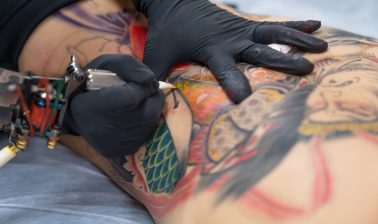
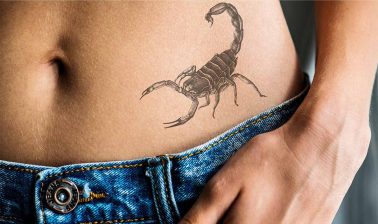
Types of Tattoos | 15 Major Styles, Including Japanese Traditional and Tribal
2024/12/01
2026/03/10
2026/03/10



Tattoos (irezumi) are broadly categorized into two groups: Japanese traditional tattooing and Western tattooing—something many people may already know. However, not everyone is familiar with the finer types, the history behind them, or the design characteristics of each style.
For example, even within Western tattooing, Chicano-style and Old School use very different approaches, and the finished look can be completely different. By understanding those differences, you can expand your options when choosing a design.
In this article, we’ll explain the major types of tattoos (irezumi), the design characteristics of each, and a bit of their history as well.
Knowing these styles also makes communication with your tattoo artist smoother and helps you choose an ideal design more easily. If you’re considering getting a tattoo, try exploring the genre you like while also learning a little about tattoo history!
If there’s a style or design you’re curious about, you can jump to it by clicking the table of contents.
If you classify them more finely, there are even more, but broadly speaking there are 13 tattoo styles.
First, we’ll introduce 7 representative styles among them!
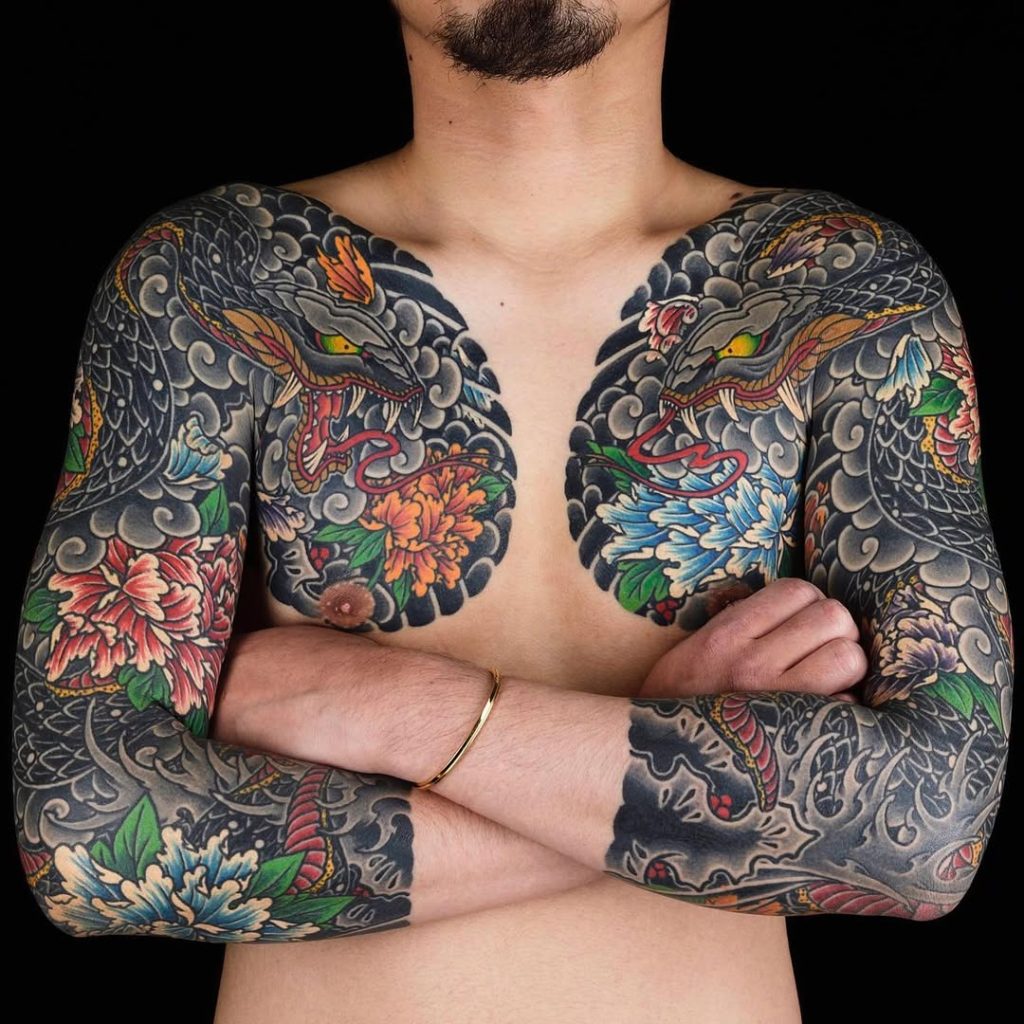
Japanese traditional tattooing (Irezumi/Wabori) is a tattoo style that incorporates traditional Japanese techniques and unique motifs. Its designs strongly reflect Japan’s culture, beliefs, and stories.
One of the biggest attractions of wabori is that it uses the entire body as a canvas, creating bold and grand compositions. In particular, the meticulous expression drawn carefully down to the smallest details is a key characteristic.
Another important point is the balance between “beauty that’s recognizable at a glance” and “functionality that can be hidden.” Designs are often created with kimono collar and sleeve lines, and how the tattoo looks in everyday life, in mind.
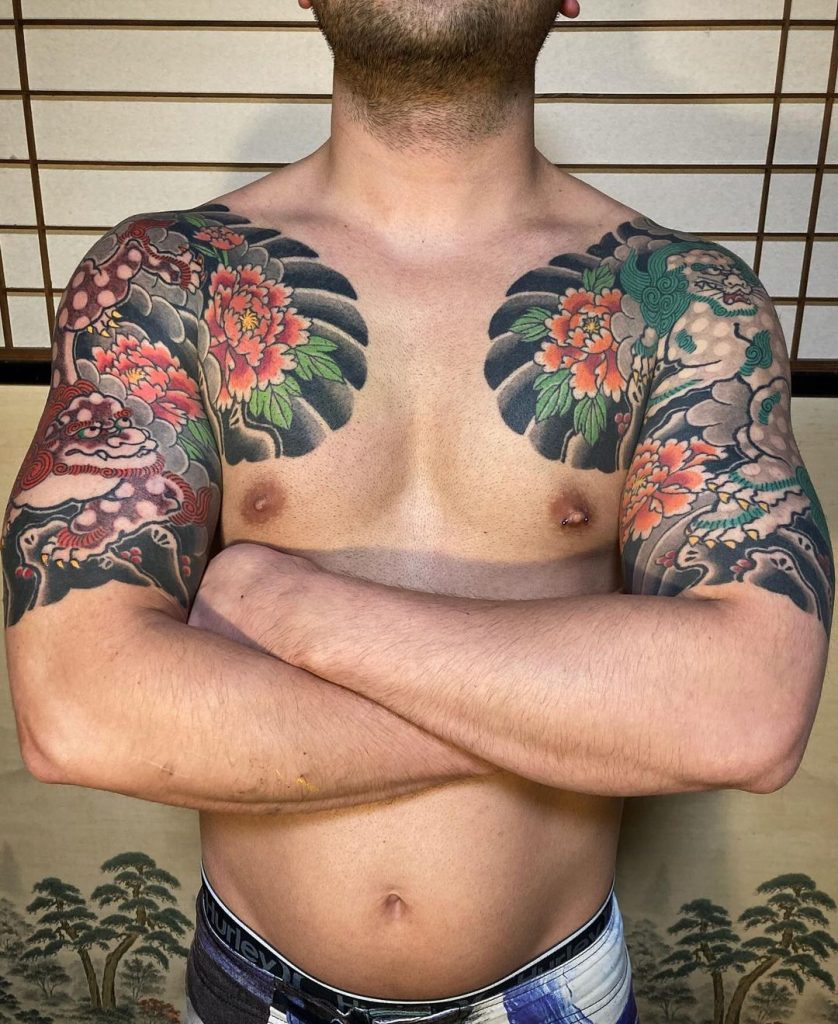
It is said that the prototype of modern wabori was completed in the Edo period. During this era, influenced by ukiyo-e and kabuki, wabori became widely popular among ordinary people.
A particularly major influence was the Chinese novel Suikoden (Water Margin) and ukiyo-e artist Kuniyoshi Utagawa, who depicted its characters. Under this influence, designs featuring legendary animals and heroes became increasingly common in wabori.
However, in the Meiji period, tattoos were made illegal through government regulation, and wabori became associated with yakuza culture. Even so, today wabori has been re-evaluated for its artistic value and remains highly popular both in Japan and overseas.
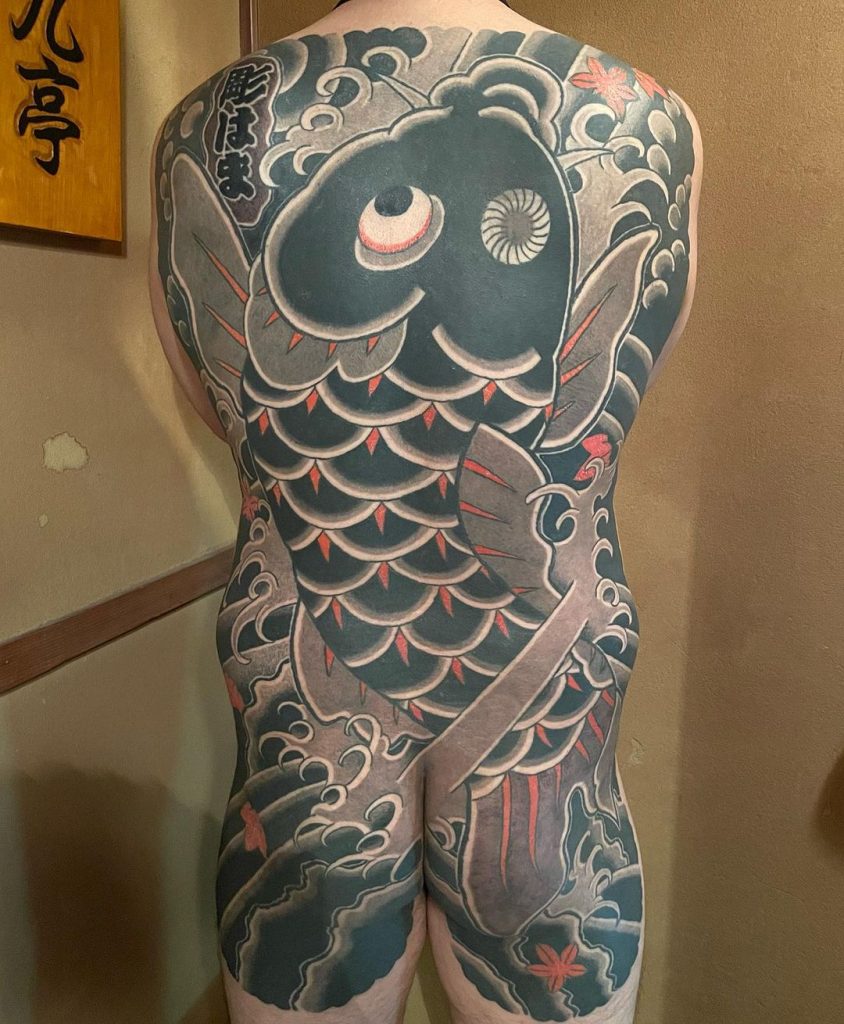
In wabori, the entire body is treated as a canvas, and the core of the design is to depict a “large story.” For example, flowing compositions that connect from the back to the arms and legs are common, and overall balance is emphasized very strongly.
In terms of color, vivid tones such as red, blue, and green are often used for the main motifs. Meanwhile, the background is filled using gray and black shading called “bokashi,” creating a distinctive contrast that gives the whole piece rhythm and impact.
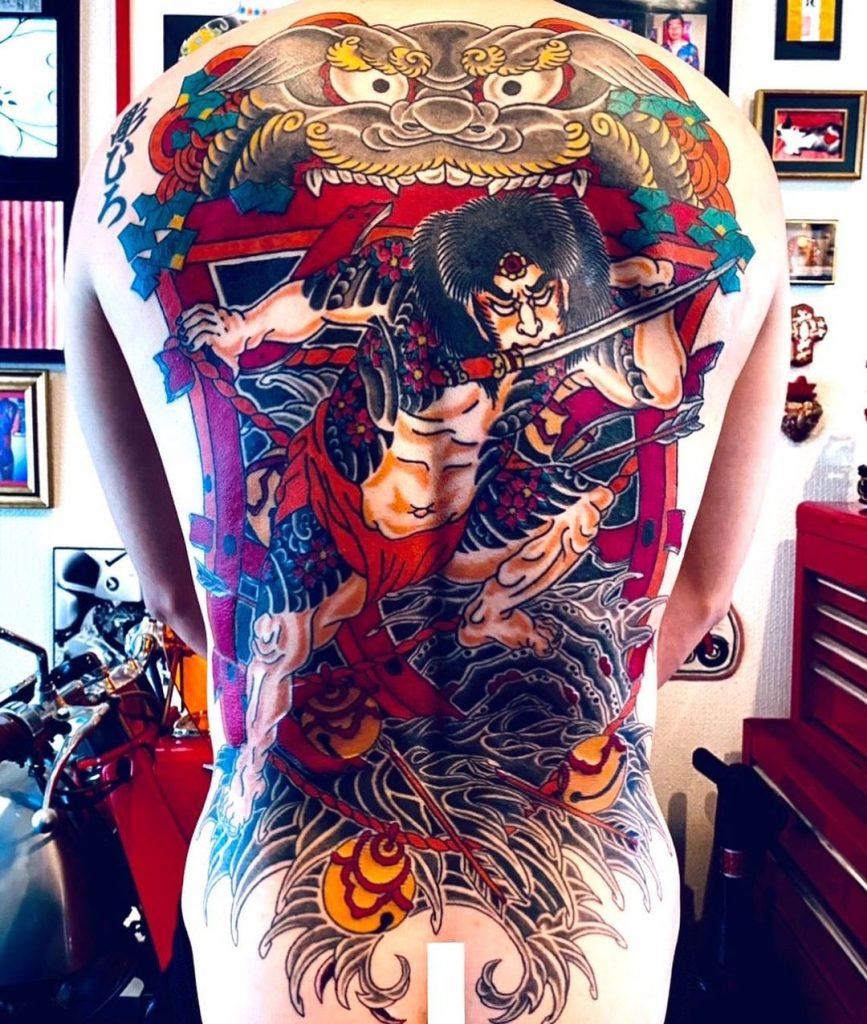
In wabori, the following motifs are frequently used.
We cover wabori in more detail in a separate article, so if you’re interested, be sure to check it out!

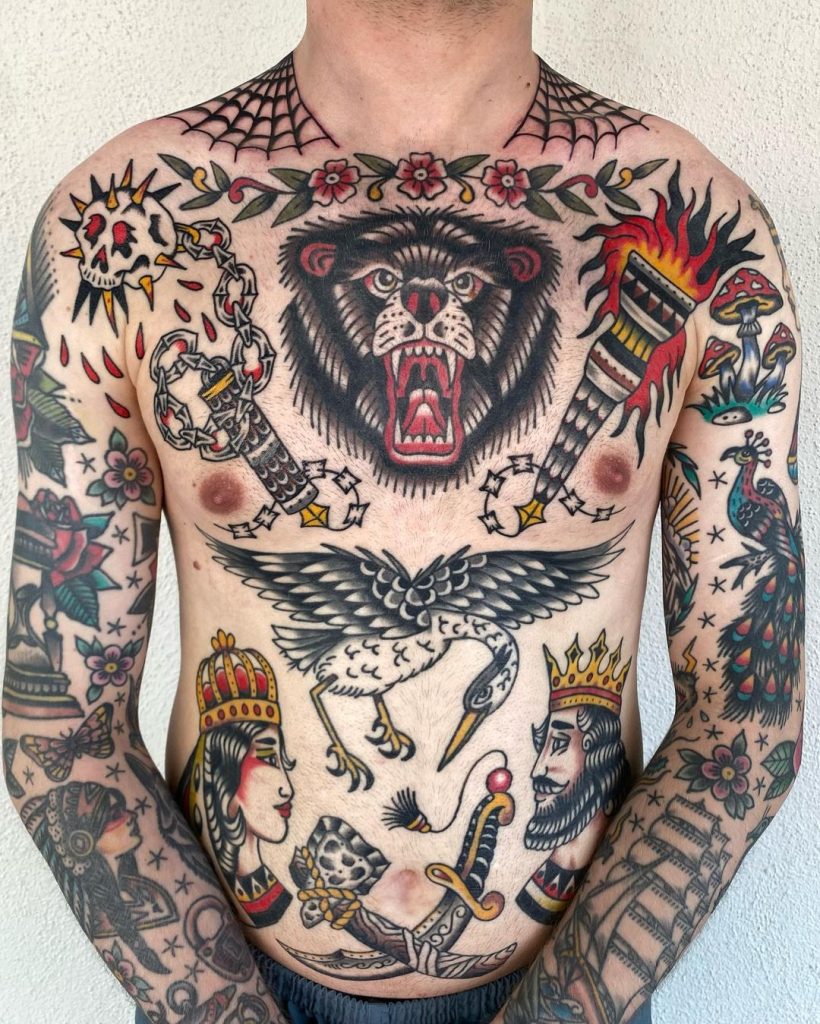
Old School tattoos are a representative style that symbolizes Western tattoo culture, and they have characteristics that contrast strongly with wabori. This style is also called “American Traditional tattoos,” often shortened to “Trad tattoos” or “Ametora.”
It was born in the United States in the early 20th century and became especially popular among sailors and soldiers. As designs symbolizing their sense of adventure and bonds, tattoos became deeply rooted in their lifestyle and culture.
The key characteristics of this style are its vivid colors and iconic motifs that are simple yet eye-catching. Designs that feel tough and powerful continue to captivate many people even today.

The origins of Old School tattoos trace back to the late 19th century through the early 20th century. During this time, many sailors stopping at ports helped spread a culture of getting tattoos as travel mementos and lucky charms.
Tattoos began spreading from limited groups to the broader public during World War II. Soldiers heading to the battlefield chose designs that carried wishes for freedom, patriotism, and safe return, and had them inked onto their bodies.
A representative tattoo artist of this era was Norman Collins, better known as “Sailor Jerry.” He created innovative designs and techniques and played a key role in establishing the Old School style.

However, in the 1960s–70s, tattoos gained a stronger antisocial image and survived mainly as an underground culture. Later, from the 1980s onward, they gained attention again through counterculture and subculture, and today they are highly valued as American vintage.

Old School tattoos are known for bold, solid outlines and the use of primary colors such as red, blue, green, and yellow.
Although the number of colors is relatively limited, the contrast is vivid, giving a strong impression with a vintage feel.

Motifs frequently used in Old School tattoos include the following.

Tribal tattoos are a style known for bold, geometric designs primarily done in black ink. Their simple yet powerful look has strong impact, and they continue to be loved by many people.
In ancient times, tribal tattoos were not just decoration—they functioned as important symbols indicating tribal identity, social status, faith, and even warrior status.

The history of tribal tattoos spans thousands of years.
Archaeologically, traces of tattoos have been found across many regions and eras, including Egyptian mummies, indigenous peoples of Oceania, African tribes, Celtic culture, Native Americans, and even Japan in the Jomon period.
At the time, tattoos played an important role as symbols of spiritual power, proof of tribal belonging and social status, or signs of a warrior’s bravery.

Even today, traditional tribal tattoos still exist in some regions. On the other hand, many of the tribal tattoos commonly seen in studios today can be considered an art style established in the latter half of the 20th century.
In particular, in Western culture during the 1990s, tribal designs became a major trend as part of fashion and self-expression.

Tribal tattoos typically use only black ink and feature geometric designs. Among them, compositions that skillfully combine lines and curves are considered the most mainstream.
Ancient tribal tattoos were designed to follow the shape of the body, and their beauty often stood out through symmetry and balance.

In modern times, while inheriting traditional elements, tribal tattoos have evolved into more abstract and individual expressions. As a result, rather than focusing on older meanings like charms and protection, today’s tribal style often emphasizes artistry.
Many designs are simple yet bold and powerful. Common motifs include natural elements such as the sun, moon, ocean, and animals.
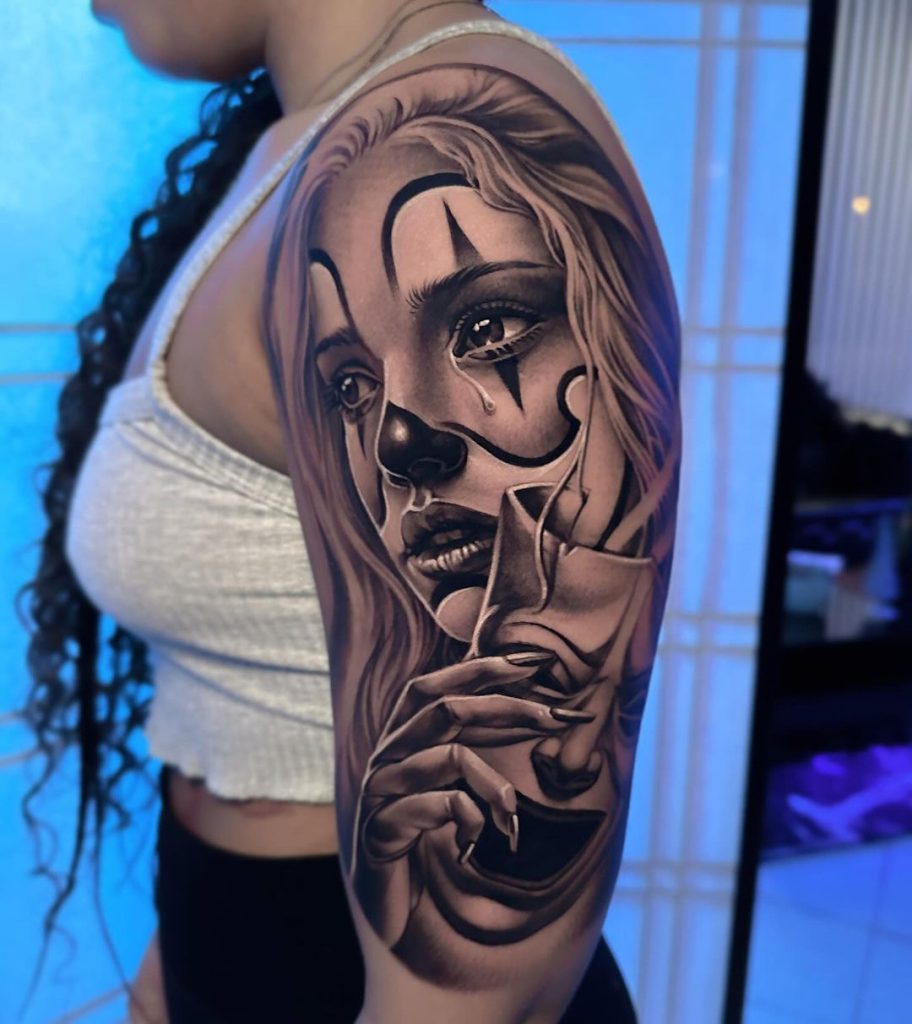
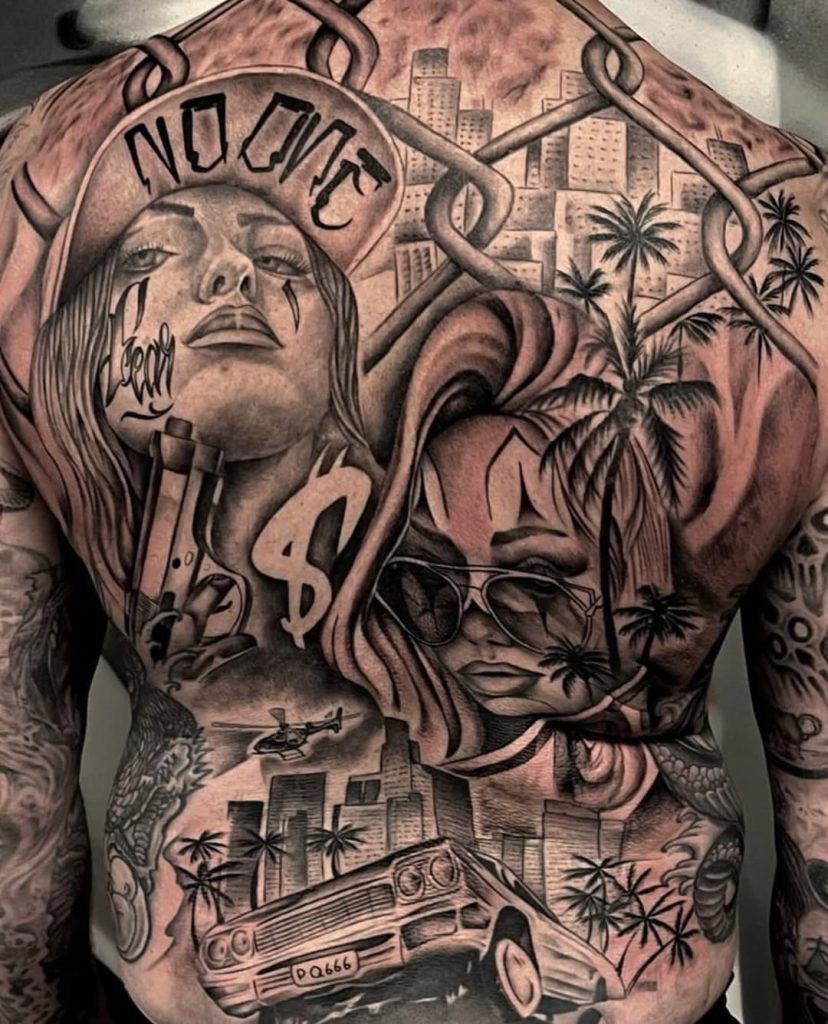
Chicano tattoos are tattoo art deeply rooted in the culture of Mexican immigrants (Chicanos) living in the western United States. With a unique aesthetic and strong messaging, they symbolize cultural background and values.
A realistic style mainly using black and gray ink is the mainstream, and themes often include religious elements such as Catholicism, love of family, street culture, and even a rebellious attitude toward society.
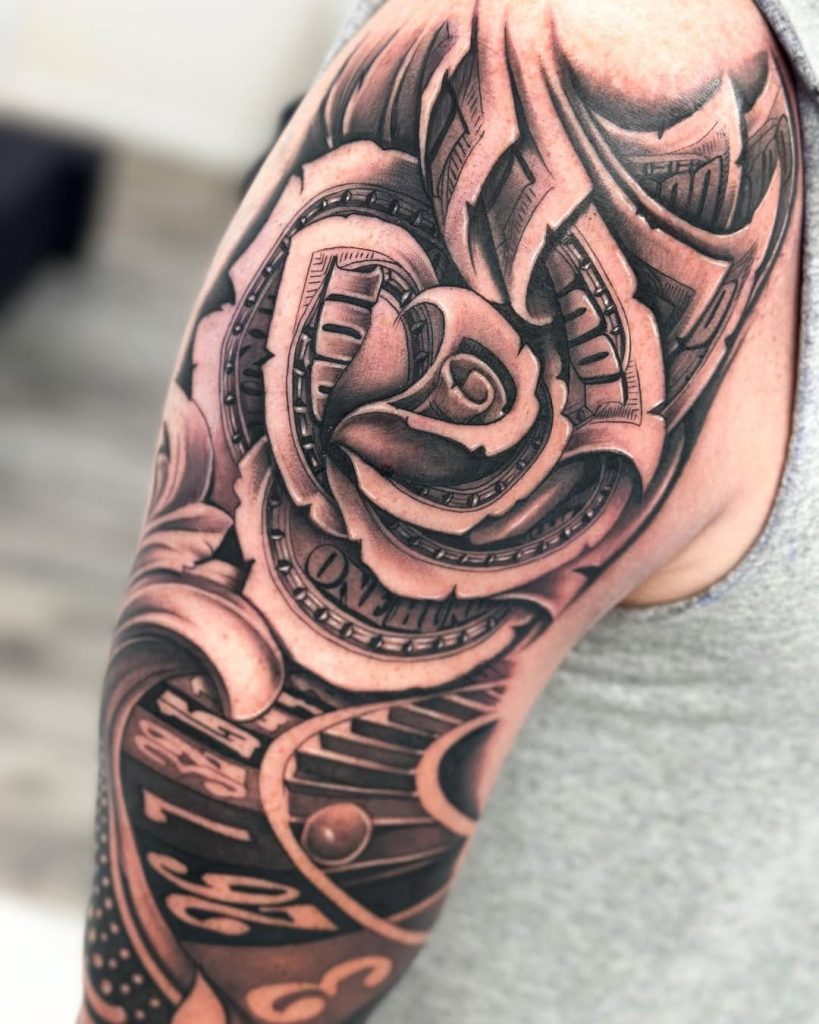
Chicano tattoos trace back to Mexican immigrant communities that rose in the American West (especially California) in the 1940s–50s. At the time, young people formed a street culture known as “Pachuco,” and tattoos began to be used as one form of self-expression that emerged from it.
In the 1960s–70s, Chicano tattoos became closely tied to prison culture. Prisoners used limited tools and their own methods to tattoo expressions of gang affiliation, faith, and love for family.
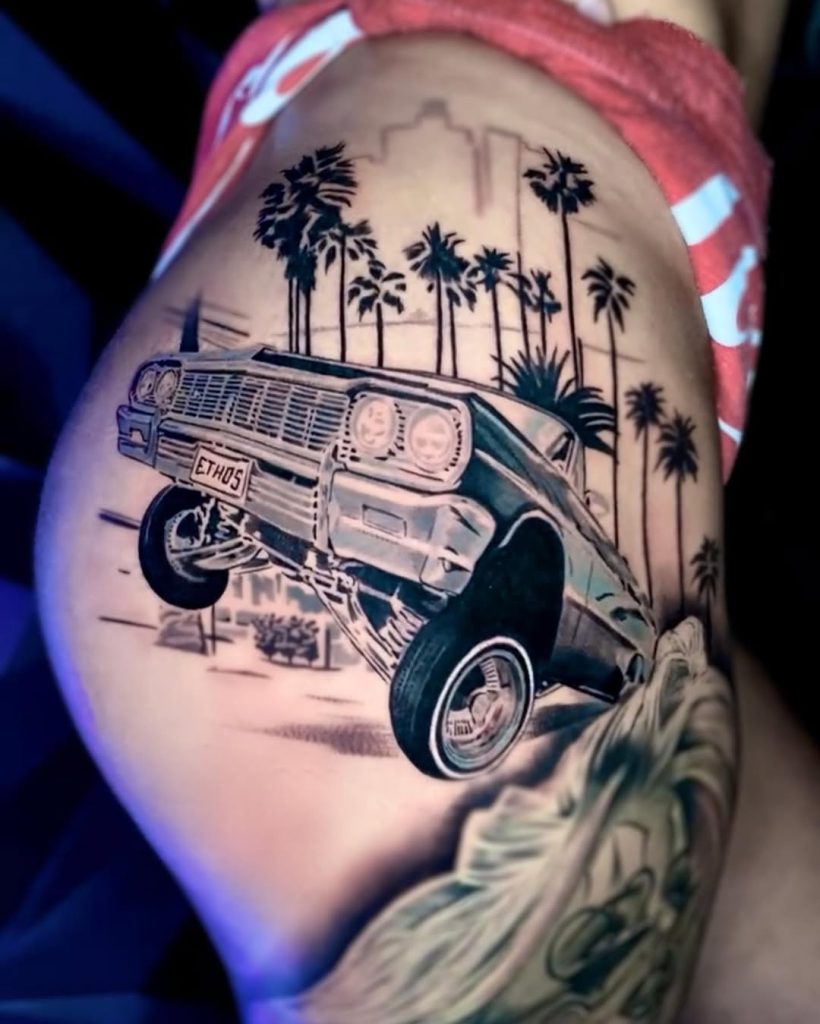
In the 1980s–90s, tattoo artists who had learned techniques in prison returned to their communities and spread tattoo methods. During this period, Chicano tattoos developed as part of street culture and became more widely recognized.
Chicano tattoos gained international recognition as a style.
And today, they have become an established style with broad support beyond the bounds of gang culture.
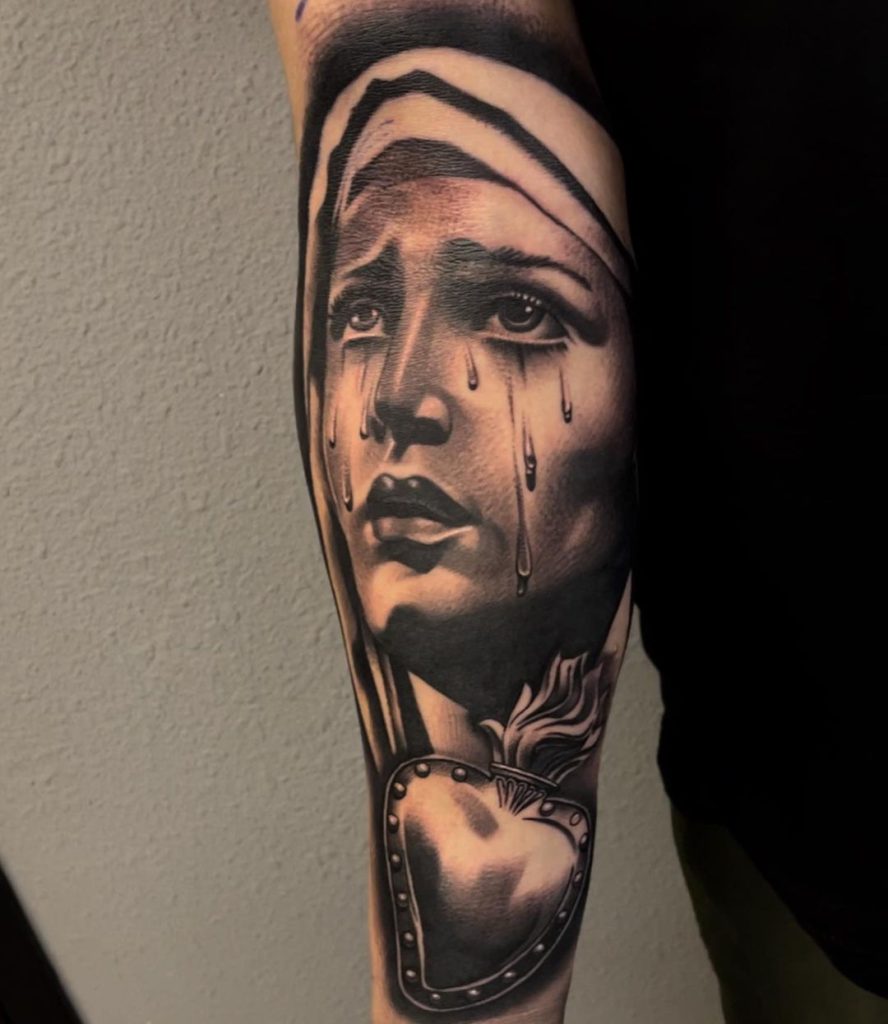
Chicano tattoo designs, based around black ink, often use shading and gradients to create a realistic, delicate, and three-dimensional finish that captivates many people.
They are often placed on large areas such as the back, chest, or full arms, and it’s also common to combine multiple motifs rather than using only one.
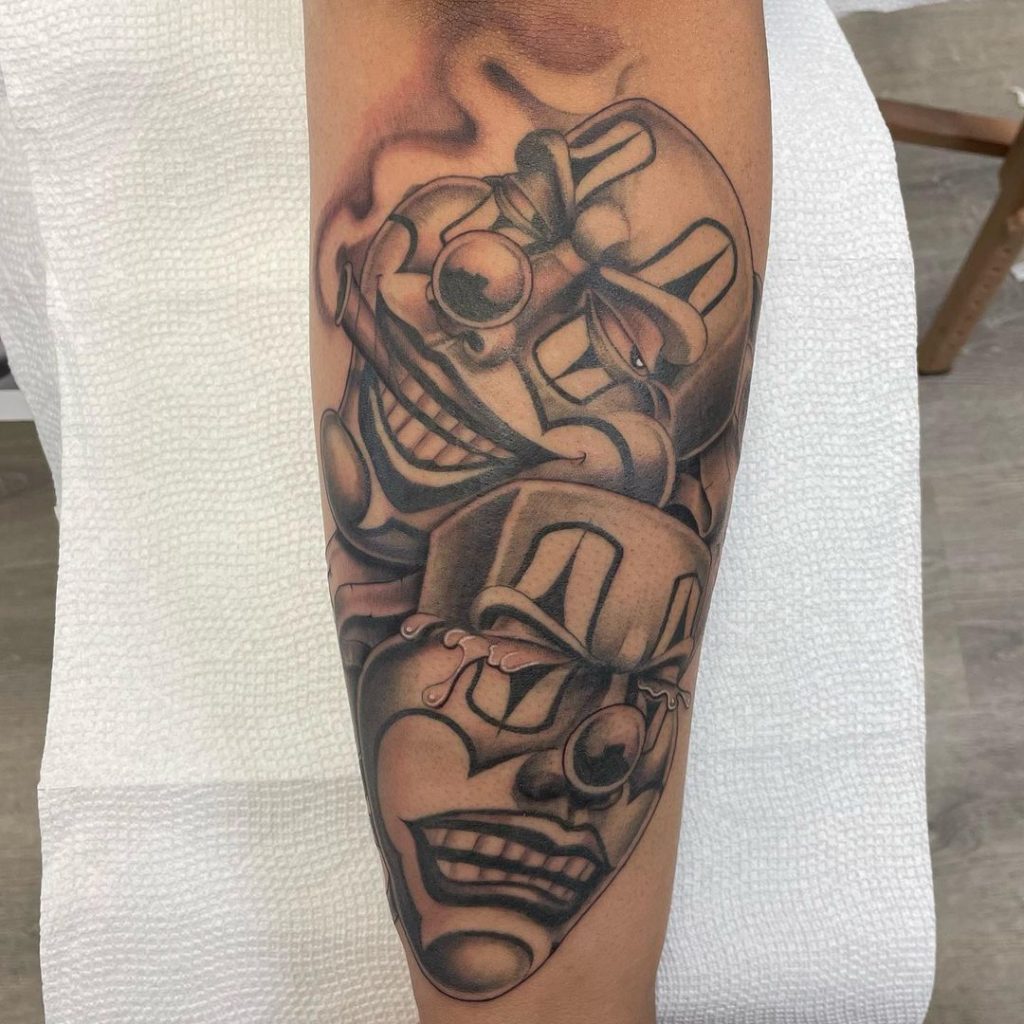
Common motifs include the following.

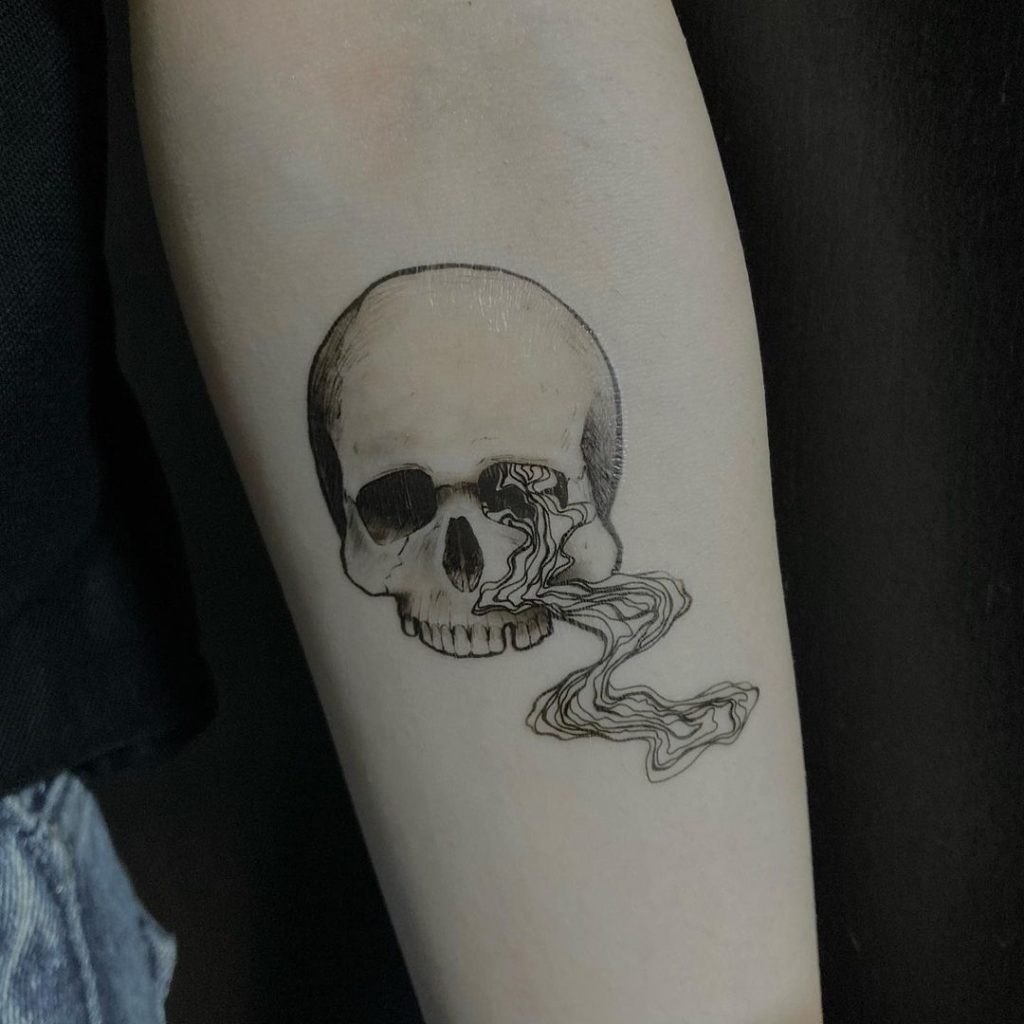
Black and gray tattoos are a style that uses black ink and relies on shading and tonal gradients to create the design.
This style can handle a wide range—from realistic tattoos to abstract designs—and is known for being simple yet highly artistic.
Because it excludes color, unlike colorful tattoos, the result is minimal and refined.

The origins of black and gray tattoos are said to come from prison culture.
In prisons, colored ink was difficult to obtain, so prisoners tattooed using handmade tools and only black ink.
In that environment, techniques developed to create gradients by diluting ink from pens or similar sources, and this unique style was born.

Later, it spread into Latin communities on the U.S. West Coast, and street tattoo artists—especially within Chicano culture—refined this simple, powerful style until it gained high recognition.
Even today, the genre continues to evolve, including the rise of artists skilled in realism and portraits, making possible even more precise, photo-like quality.

While black and gray tattoos often favor simple, clean composition, large pieces with complex detail are also extremely popular.
Many designs are dynamic and follow the body’s shape, making full use of each area’s structure.
Also, as the name suggests, because it generally does not use color inks, it tends to remain relatively clear over time—another major advantage.

Common motifs include the following.

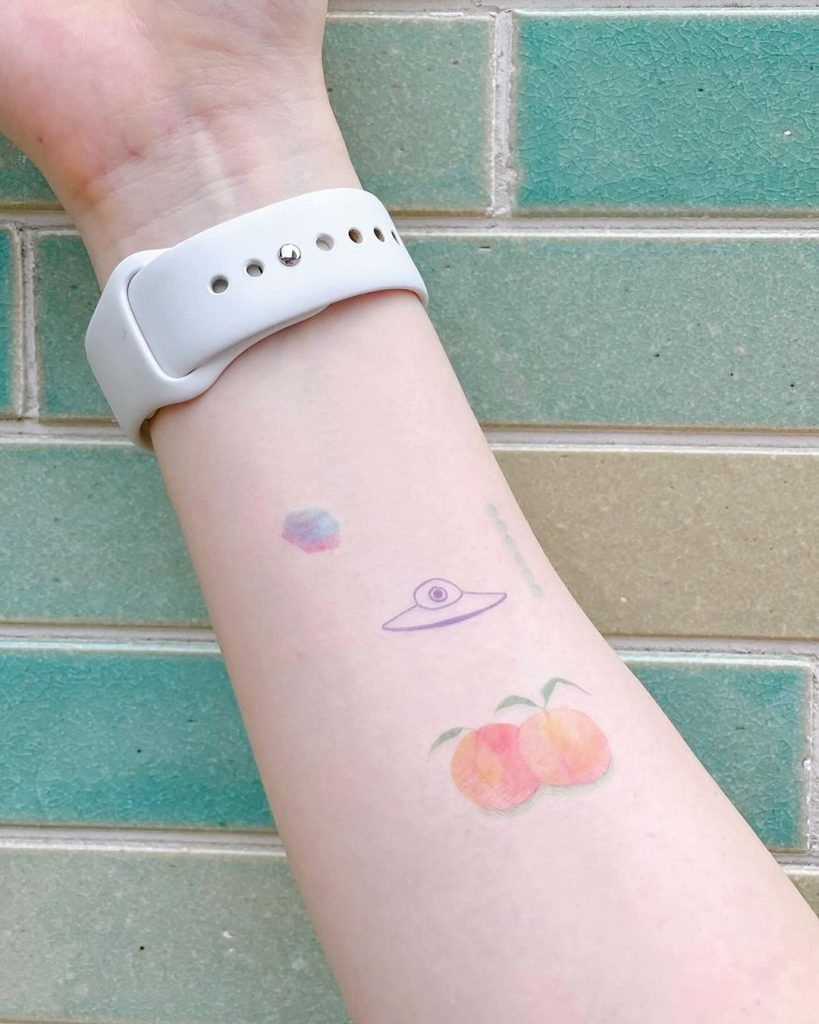
One-point tattoos are, as the name suggests, small tattoos, typically featuring simple designs.
They are often inked as small accents on relatively discreet areas such as the wrist, ankle, shoulder, or fingers, making them especially popular for first-timers.
Even though the design is subtle, it still allows you to express your individuality, so it’s often used for meaningful symbols or minimal art.

The concept of one-point tattoos has existed since ancient times and has been used as marks and symbols.
Even in ancient Egypt and Polynesian cultures, small symbols with specific meanings were carved into the body.
In the West as well, sailors and adventurers commonly got small tattoos as voyage mementos and lucky symbols—so similar practices can be seen across many eras and regions.

From the late 20th century, as tattoos spread as part of pop culture, one-point tattoos gained attention as a fashionable way of self-expression.
Especially in today’s world where minimalism is favored, simple and refined one-point tattoo designs are loved by many people.
Also, because they are small, they tend to reduce pain and cost, and are easier to cover up later (overwriting with a different design), so they have become a beginner-friendly style as well.

As the name suggests, the size is small, and generally designs within a few centimeters are called one-point tattoos. Also, it’s common to place them on subtle areas such as the wrist, fingers, behind the ear, ankle, or nape—another key characteristic.
Many are done in monochrome (black ink), but sometimes a small pop of color is added. Especially for small designs, fewer colors often look cleaner and more balanced visually.

Common motifs include the following.

Lettering tattoos are a style centered on letters, words, or sentences.
They strongly emphasize message and emotion—expressing personal messages and feelings through names, mottos, poems, lyrics, or specific phrases.
Because the impression changes greatly depending on the font and script, this style allows a wide range of expression—from simple designs to decorative art pieces.

From the early days of tattoo culture, there has been a custom of carving words and names. In ancient Egypt and Polynesian cultures, hieroglyphs or letter-like patterns were sometimes incorporated into tattoos.
In the 19th century, sailors and soldiers tattooed their own names, units, homeland, or the names of loved ones. Lettering in this era was simple, and handwritten-style designs were common.
In the 20th century, as tattoo art evolved, lettering tattoos also became more decorative. In particular, within Chicano culture (Mexican Americans), an ornate and refined style called “Chicano lettering” developed and became closely tied to black-and-gray style.

In modern times, with the evolution of typography and font design, many different moods of lettering tattoos can now be created.
Handwritten styles, Gothic type, cursive scripts, modern sans-serif fonts, and more are customized depending on the client’s personality and message.

They are often placed to follow the body’s lines—commonly on the chest, arms, wrists, fingers, neck, or back. For long sentences, it’s common to place them vertically along the ribs or back.
Sizes range from small one-point tattoos to large lettering across the chest.

Common themes in lettering tattoos include the following.
Because a typo will stay forever, be sure to check spelling and design beforehand.
From here, we’ll introduce 8 tattoo styles that are more minor than the 7 above, but have become popular in recent years.
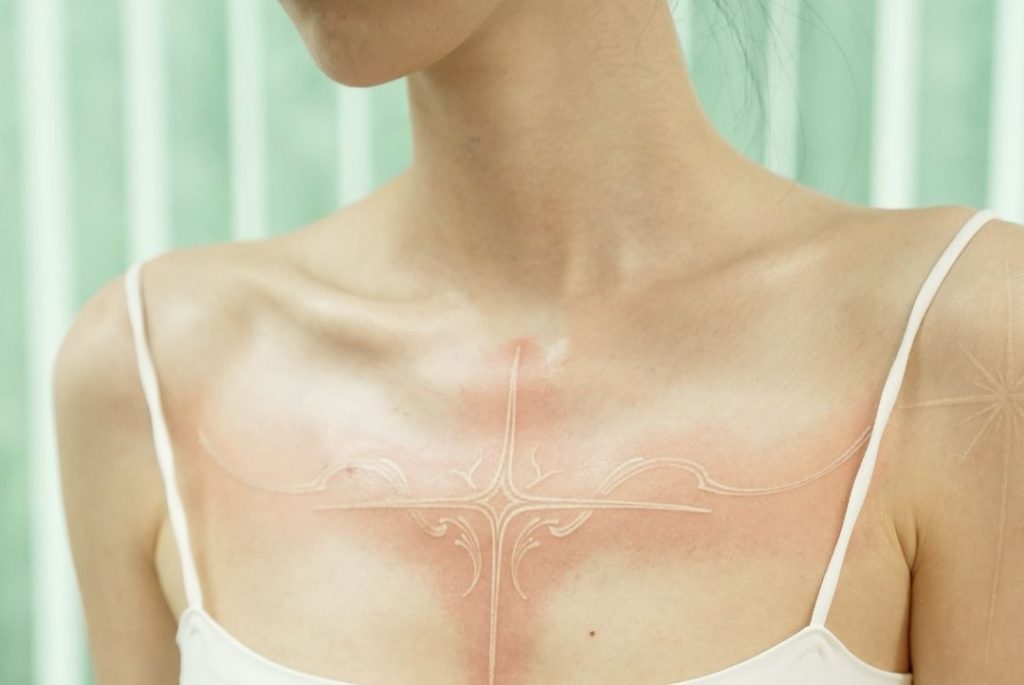
White ink tattoos are a style that uses white ink. Unlike typical black or color tattoos, they are subtle and less noticeable.
Depending on lighting angles and skin texture, the appearance can change. Because the contrast with skin tone is low, they create a simple yet mysterious and delicate impression.
They are highly popular among people who want to avoid overly conspicuous tattoos, or who want something unique.
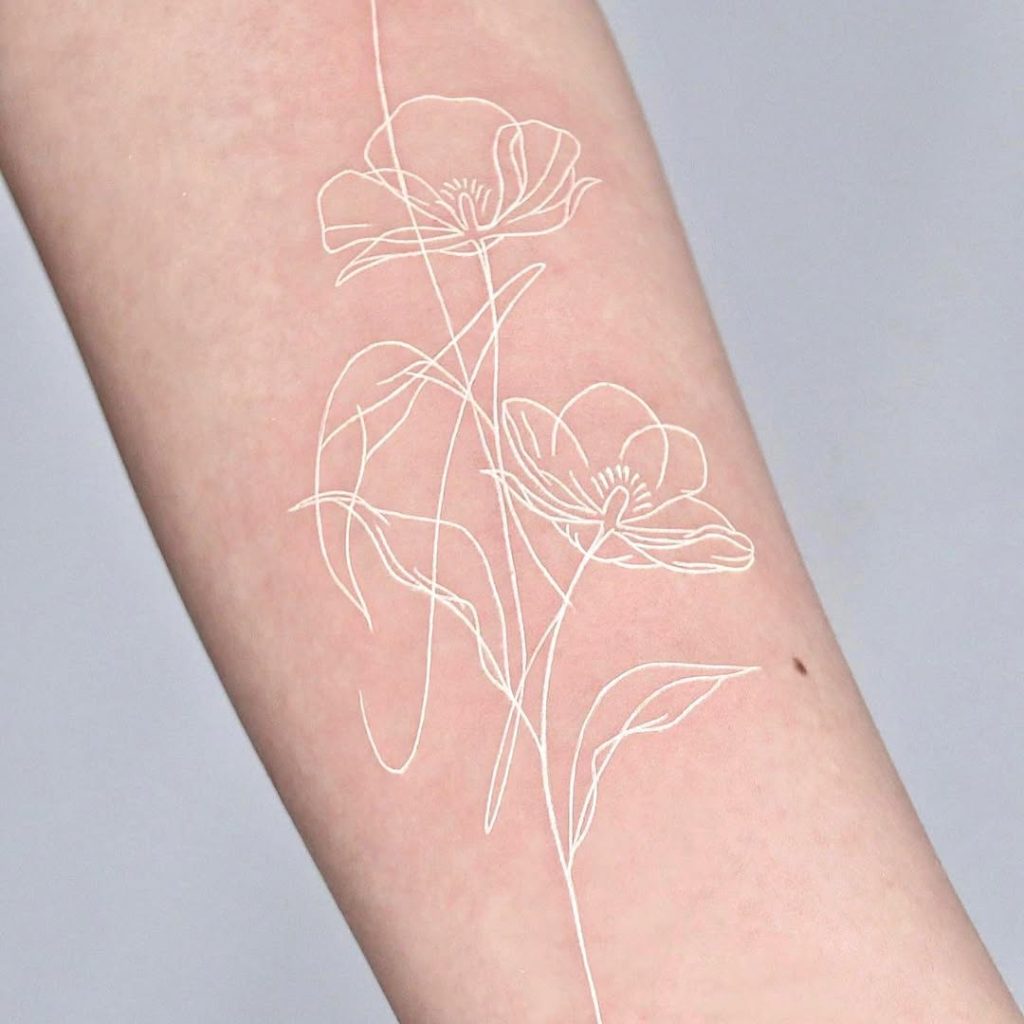
White ink started being used in tattoos from the late 20th century into the early 21st century. As ink manufacturing evolved and white pigment began to remain in the skin more consistently, this style became possible.
White ink tattoos began gaining real popularity in the 21st century, driven by platforms like social media and Instagram where artists and their work could spread widely.
In recent years, designs using white ink that reacts to UV light have also appeared. In normal settings they look subtle, but under UV light they glow, allowing a unique finish to be enjoyed.
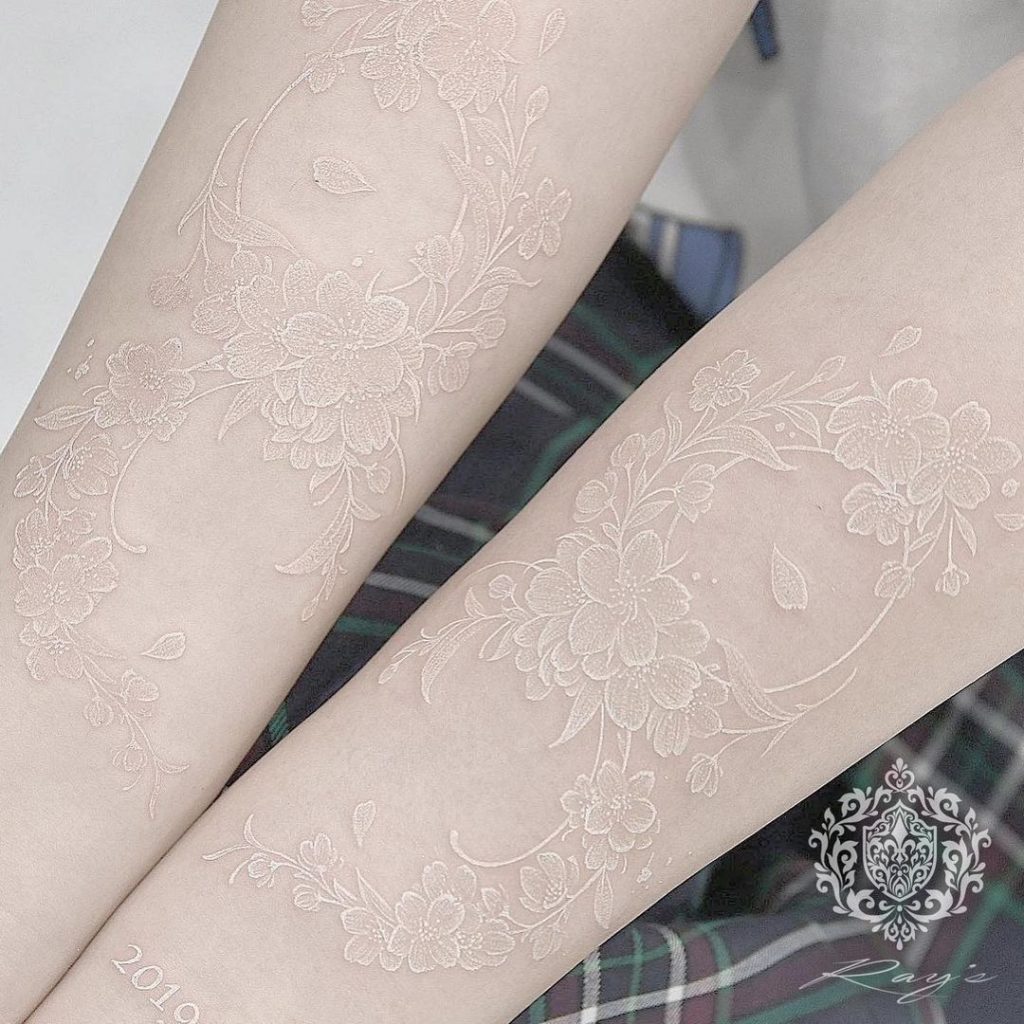
White ink tattoos are delicate compared to other colors and tend to blend into the skin tone. On lighter skin, they can create a sculptural, embossed look; on darker skin, they can create bright contrast. This makes it possible to achieve designs that are subtle yet still present.
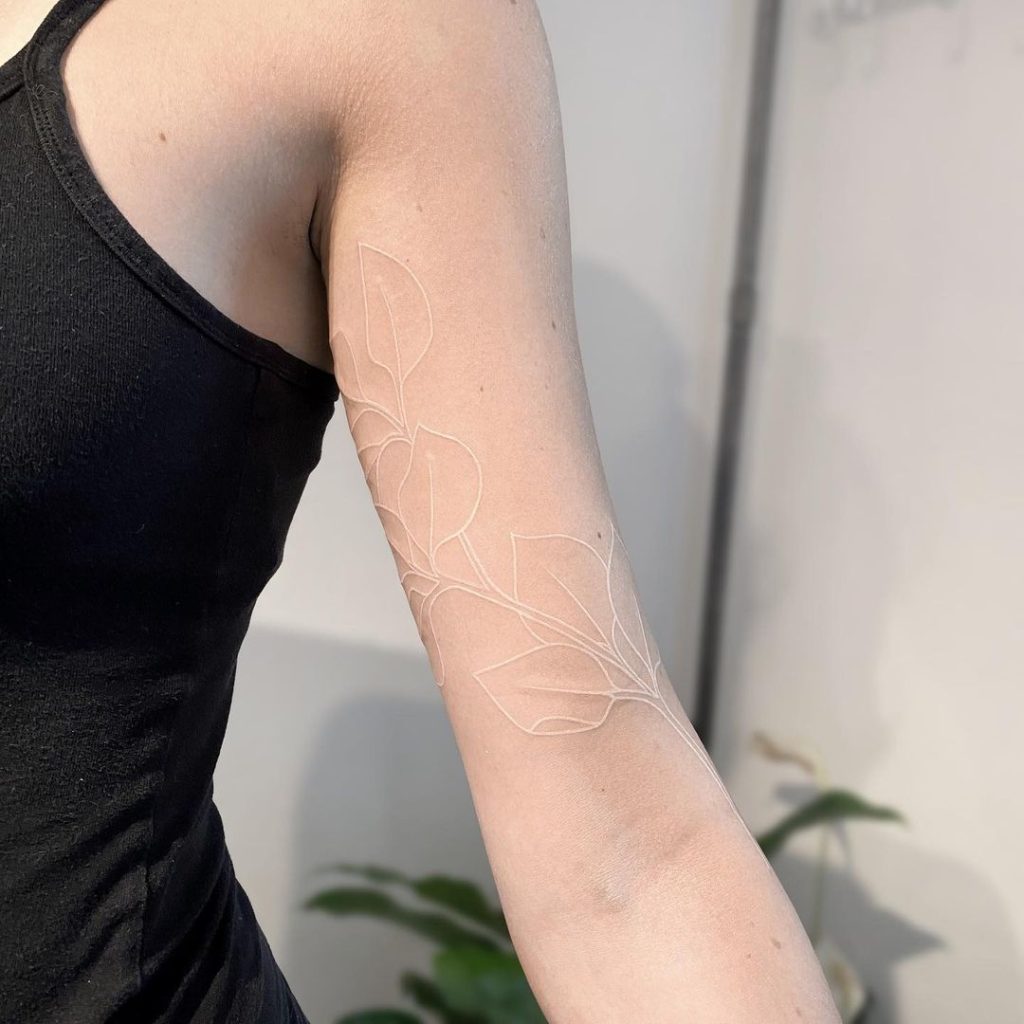
White ink is often used for geometric patterns, floral designs, and lettering—fine, delicate designs in particular. It’s also commonly done on discreet areas such as fingers, wrists, or behind the ear, giving a simple and elegant impression.
On the other hand, white ink tattoos are weak against UV exposure, so they may fade or discolor over time. Because of that, careful maintenance such as frequent sunscreen use is needed.
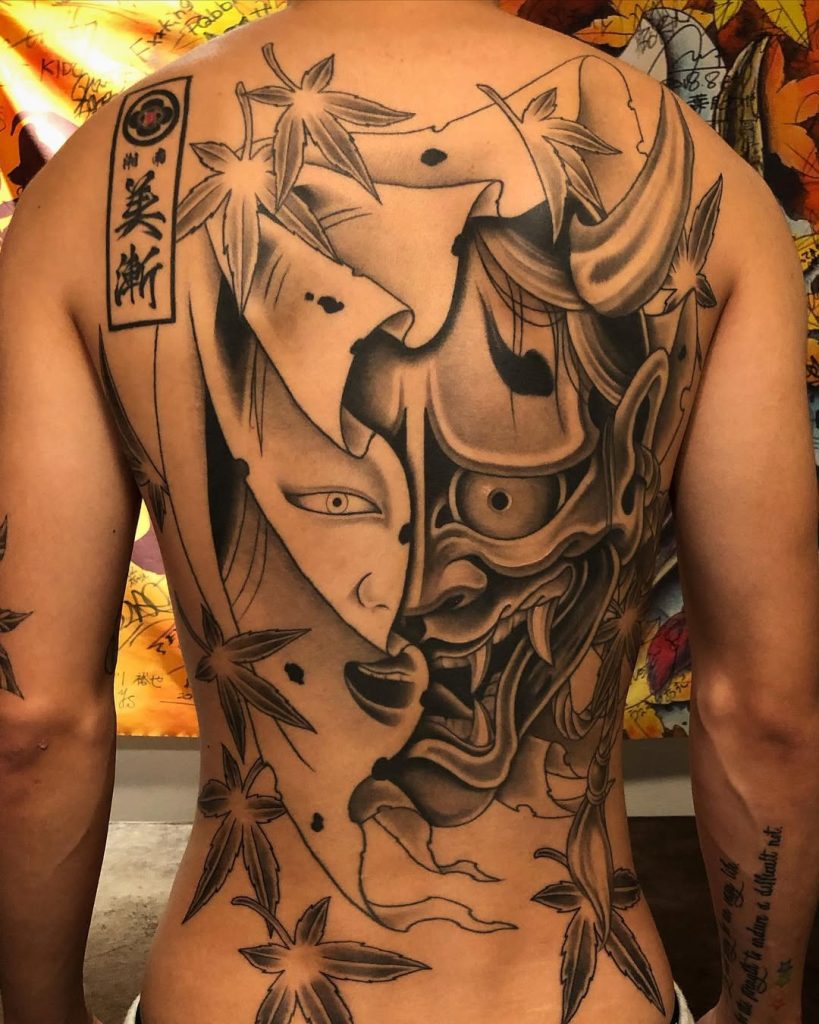
Neo Japanese tattoos are a newer genre that fuses traditional Japanese wabori (irezumi) with modern art and tattoo styles.
While respecting the characteristics of classic wabori, they incorporate contemporary approaches in color, composition, and rendering.
As a style that carries tradition forward while emphasizing freedom of expression and individuality, it has been gaining popularity both in Japan and overseas.
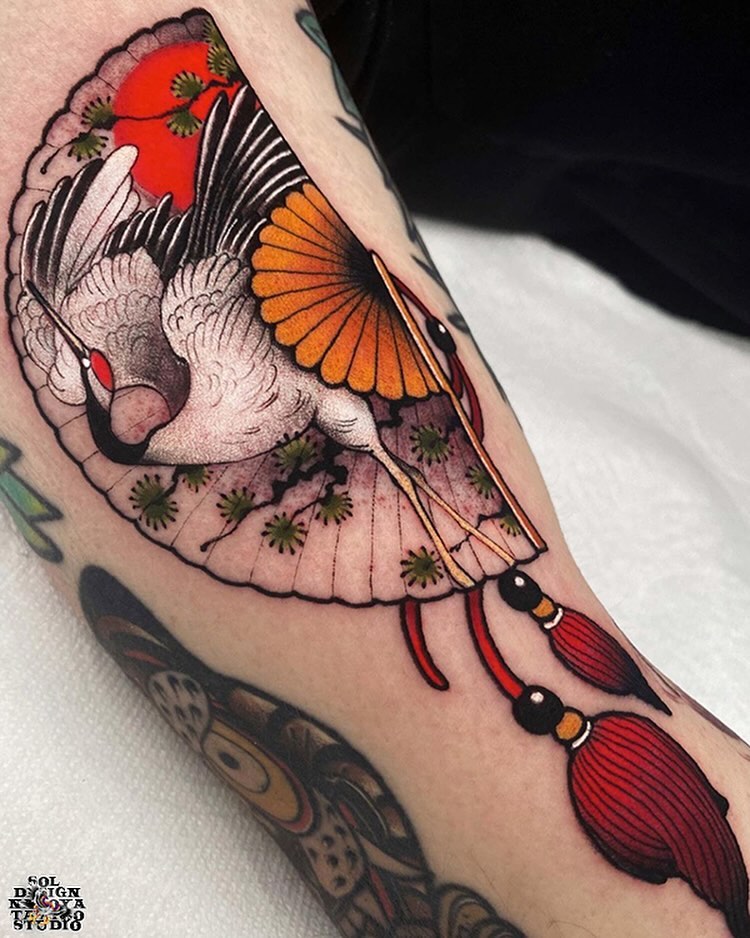
Neo Japanese tattoos emerged in the 1990s–2000s, as wabori gained worldwide attention. By incorporating Western-popular elements such as American Traditional, New School, and realism into traditional wabori, Japanese artists evolved the style in their own way.
As exchange with overseas tattoo culture deepened, momentum grew to introduce new techniques and expressions into traditional wabori, and this style continues to evolve today.
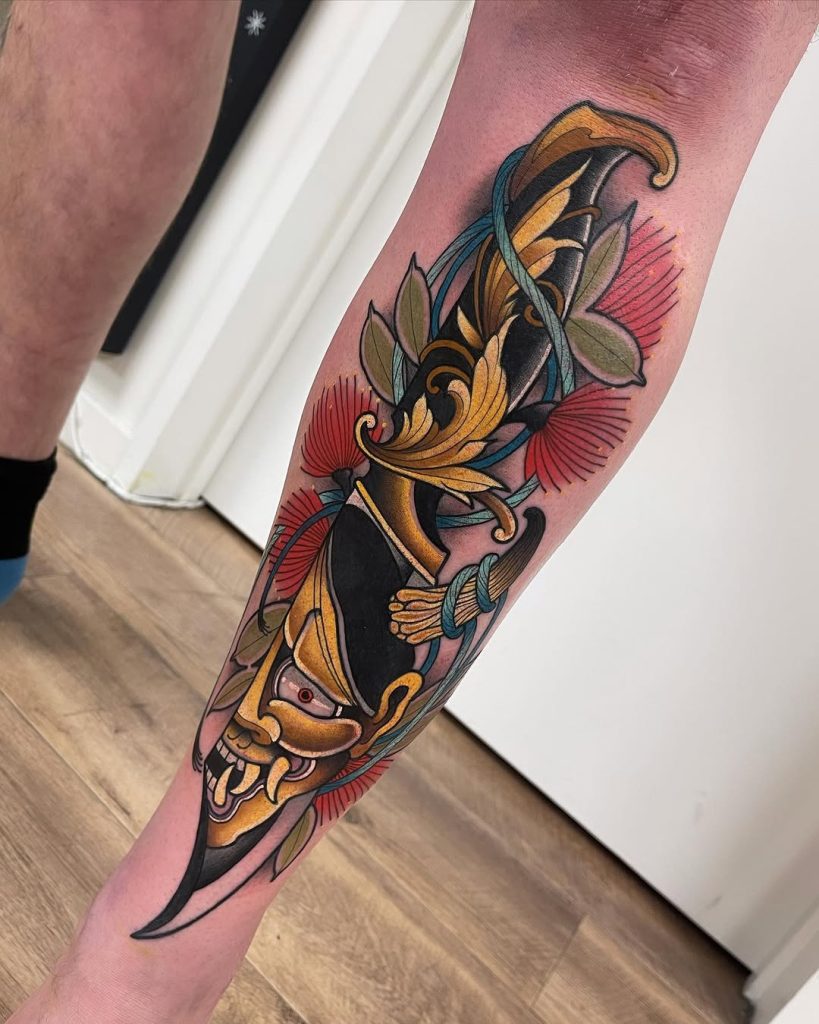
Recently, designs have appeared that keep traditional wabori techniques and motifs while adding vivid coloring and three-dimensional shading.
Overseas, it is known as Neo-Japanese or Japanese neo-traditional, and it is especially supported among younger generations in Europe and North America.
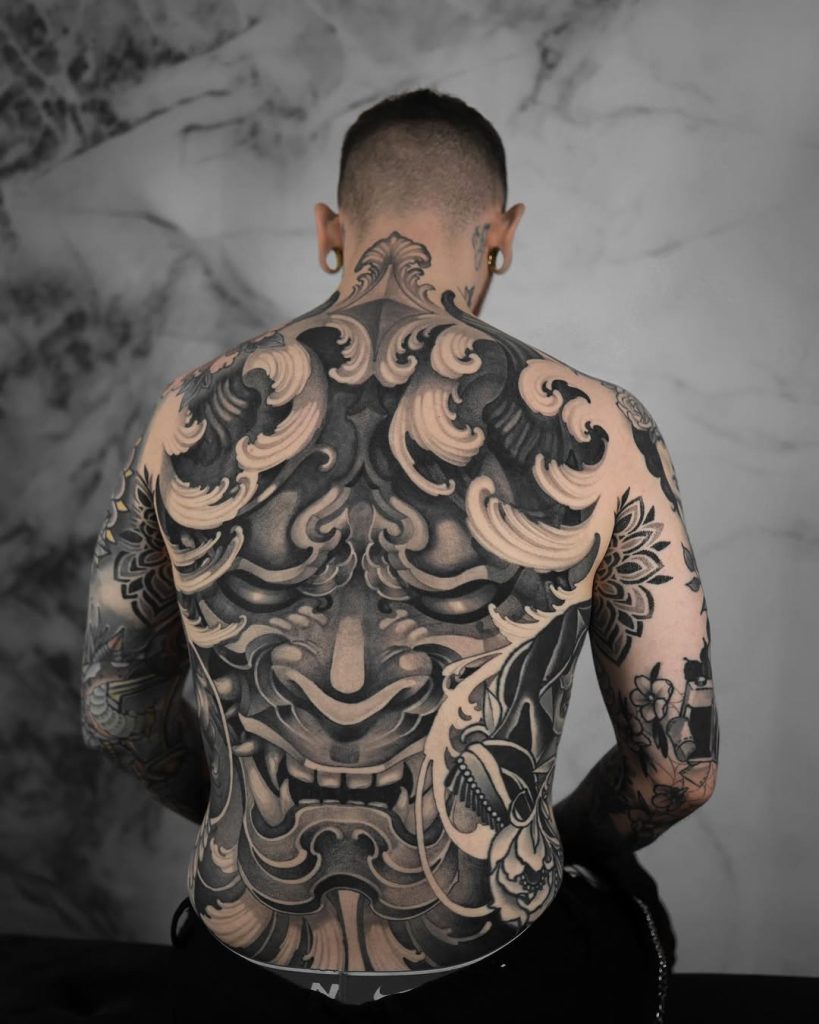
Neo Japanese tattoos create a modern atmosphere by adding neon or pastel colors to the calm palette typical of wabori. Also, rather than staying purely flat, they often feature compositions that emphasize depth and dynamic movement.
They may be done in a traditional body-suit format (covering the back, and extending across the arms, legs, and chest). At the same time, partial designs such as one-point tattoos, sleeves, or “nuki-bori” (motif-only without heavy background) on the back are also popular.

Portrait tattoos are a style that realistically depicts a human or animal face, or a specific person. This style features photo-like realism and requires technical precision and the artist’s artistic skill.

From the 19th to early 20th century, realism became a major trend in art, and tattoos were influenced as well. Early portrait tattoos were commonly used by sailors and soldiers to memorialize family members or lovers on their skin.
In the mid-20th century, improvements in tattoo machines and ink enabled more precise, realistic portrait tattoos. In particular, the development of Chicano and black-and-gray styles made it possible to express realistic shadows and textures.

In the 21st century, photo-like hyper-realism tattoos became popular, and portrait tattoos came to demand even higher artistic quality.
Also, as color tattoo techniques evolved, not only black-and-gray but also full-color realistic portraits became widely popular.

Portrait tattoos are characterized by realistic designs based on high-resolution photos, reproducing details such as wrinkles, hair, and skin texture. Accurate shading is used to create depth and realism.
Another advantage is that you can choose from many sub-styles, such as American Traditional, Chicano, black-and-gray, and hyper-realism.

As for placement, wide and relatively flat areas such as the arms (especially the forearm), thighs, and back are suitable.

Geometric tattoos are a tattoo style centered on geometric patterns. By combining geometric shapes such as straight lines, curves, triangles, squares, circles, and dots, they build complex and refined designs.
From simple shapes to extremely complex patterns, a wide variety is possible, and the style is known for minimal beauty and strong artistry. This style emphasizes visual harmony and balance, and is often inspired by nature, the universe, and the order of life.

Geometric patterns have been used in many cultures since ancient times. For example, traditional tattoos in Polynesian, Aztec, Maya, and Celtic cultures frequently feature geometric patterns. These often carried religious or ritual meanings and expressed the order of nature and the universe.
In medieval Europe, geometric patterns were recognized as “sacred geometry,” considered symbols that connected mathematics, nature, and philosophy. This way of thinking became a foundation for modern geometric tattoos.

Modern geometric tattoos spread in the latter half of the 20th century. Especially as computer technology and digital art advanced, more precise designs became possible, and geometric tattoos gained attention as highly artistic tattoos.

Monochrome (black-and-gray) and linework are common, but styles incorporating color also exist. It’s also popular to incorporate mathematical order such as the golden ratio into designs.

Common motifs include the following.
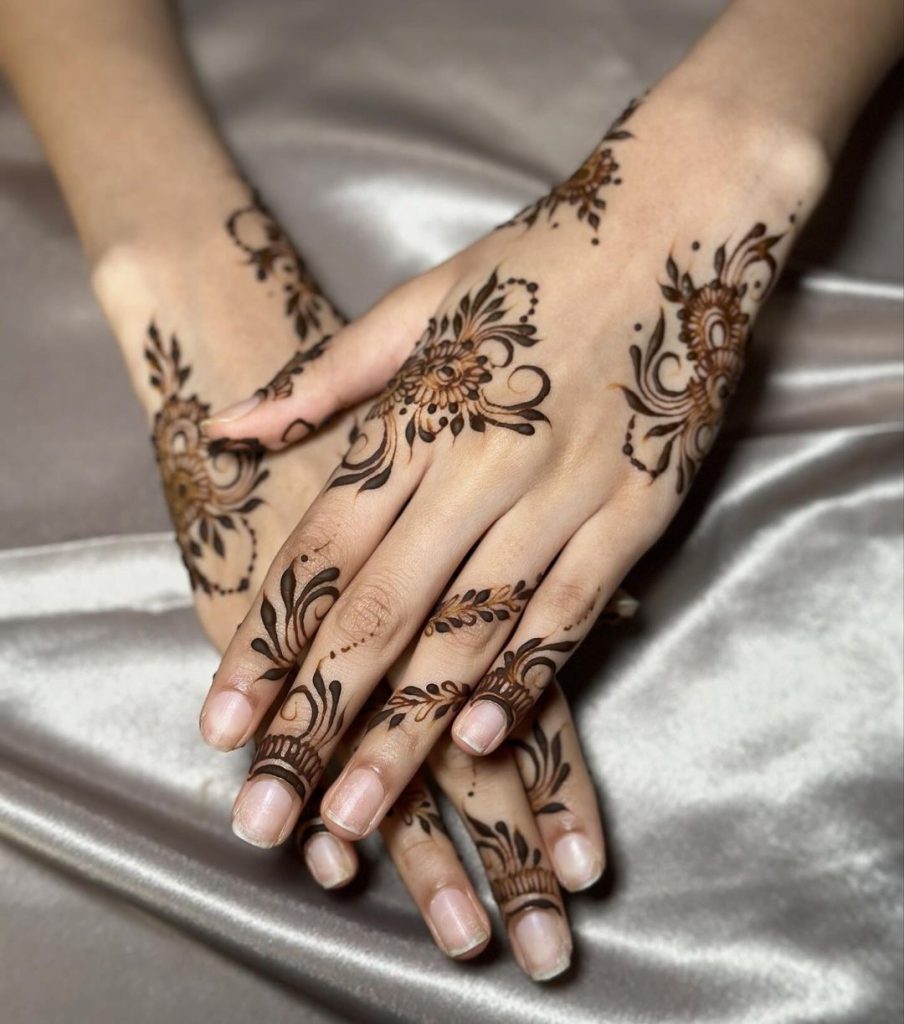
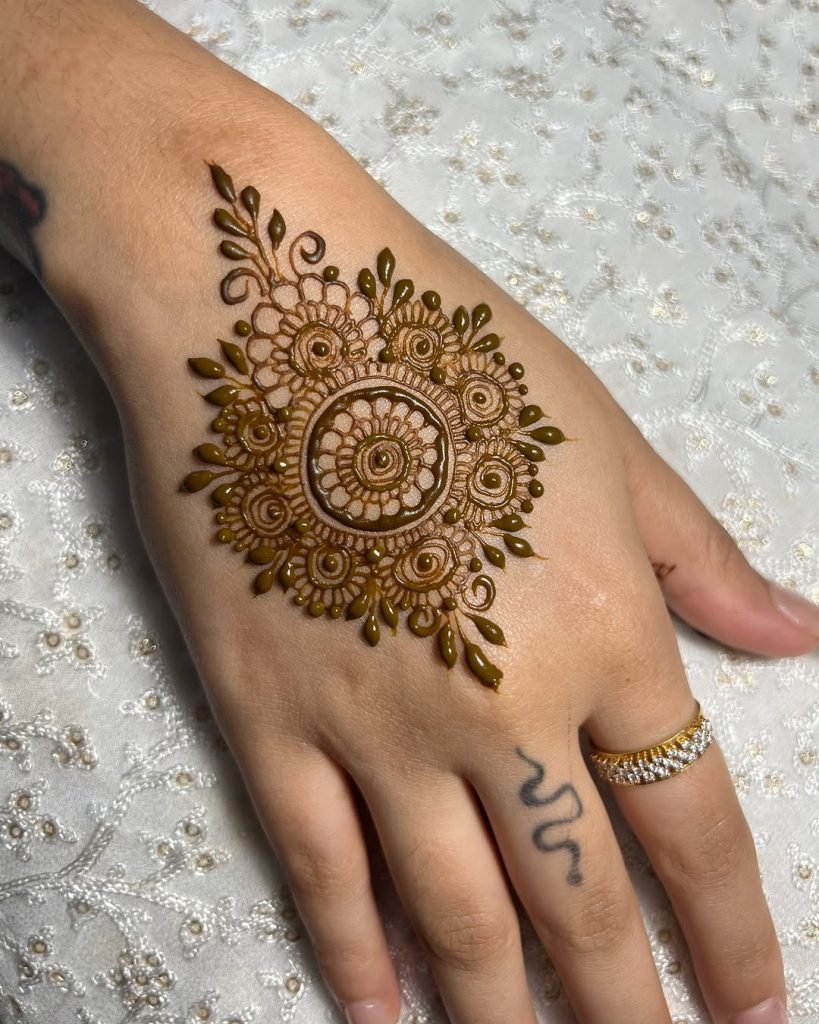
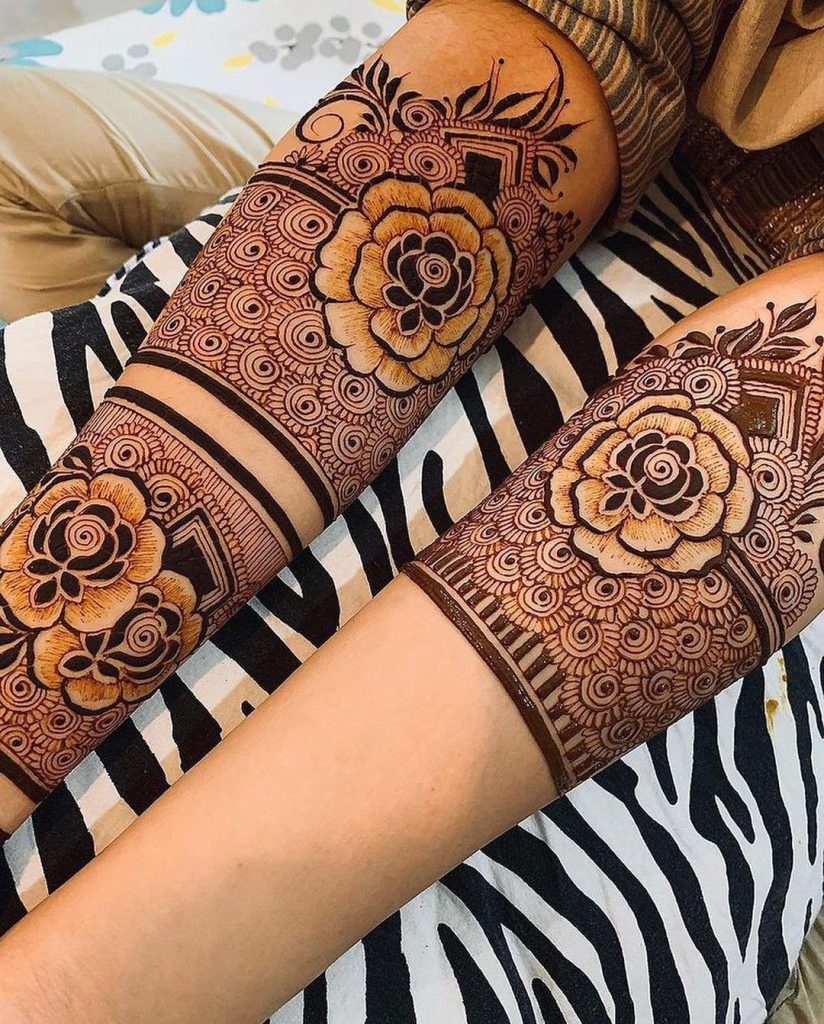
Henna tattoos are temporary tattoos made using a paste created by drying henna plant leaves into powder, then mixing it with water, lemon juice, and essential oils.
They are deeply rooted in traditional cultures of India, Arabia, the Middle East, and Africa, and are used as decoration for weddings and religious rituals. The paste is applied directly to the skin and, after it dries, it is peeled off—leaving a reddish-brown pattern stained into the skin.

Jagua tattoos are temporary tattoos made using a natural dye extracted from the fruit of the “Genipa Americana” plant found in South America. Similar to henna, but with a deep blue-black color, they have a look closer to permanent tattoos.
Henna tattoo
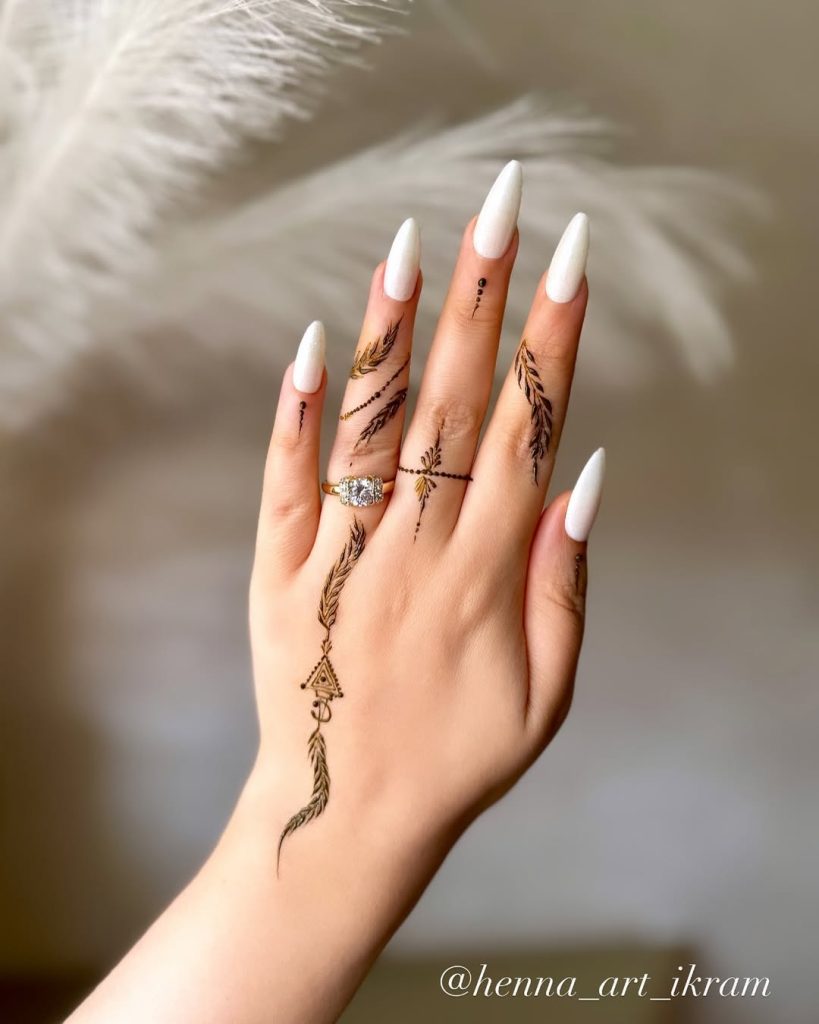
Henna use dates back about 5,000 years, and it is said that Cleopatra used henna for beauty in ancient Egypt. In India and the Middle East, its use in religious rituals and festivals has been common.
In India, it is known as “Mehndi,” and intricate patterns drawn on a bride’s hands and feet for weddings are especially famous. In the Middle East and North Africa, it has also been used as a symbol to ward off evil and bring good luck.
Today, it is popular worldwide as fashion and as an alternative to permanent tattoos.
Jagua tattoo

Indigenous peoples in the Amazon have used jagua as part of body decoration and rituals. It also had practical uses, such as repelling insects and protecting the skin.
From the 1990s onward, jagua dye began being used commercially and spread worldwide as a temporary tattoo material.
| Item | Henna Tattoo | Jagua Tattoo |
| Color | Reddish-brown | Blue-black |
| Duration | About 1–3 weeks | About 2–3 weeks |
| Origins | India, the Middle East, Africa | South American Amazon |
Henna tattoo
Arabic style: Bold, flowing flowers and leaves.
Indian style: Extremely detailed, often featuring geometric designs and paisley patterns.
African style: Symmetrical geometric patterns.
Jagua tattoo
Designs similar to henna are also possible, but because the color is darker, modern simple designs and tribal patterns are especially popular.
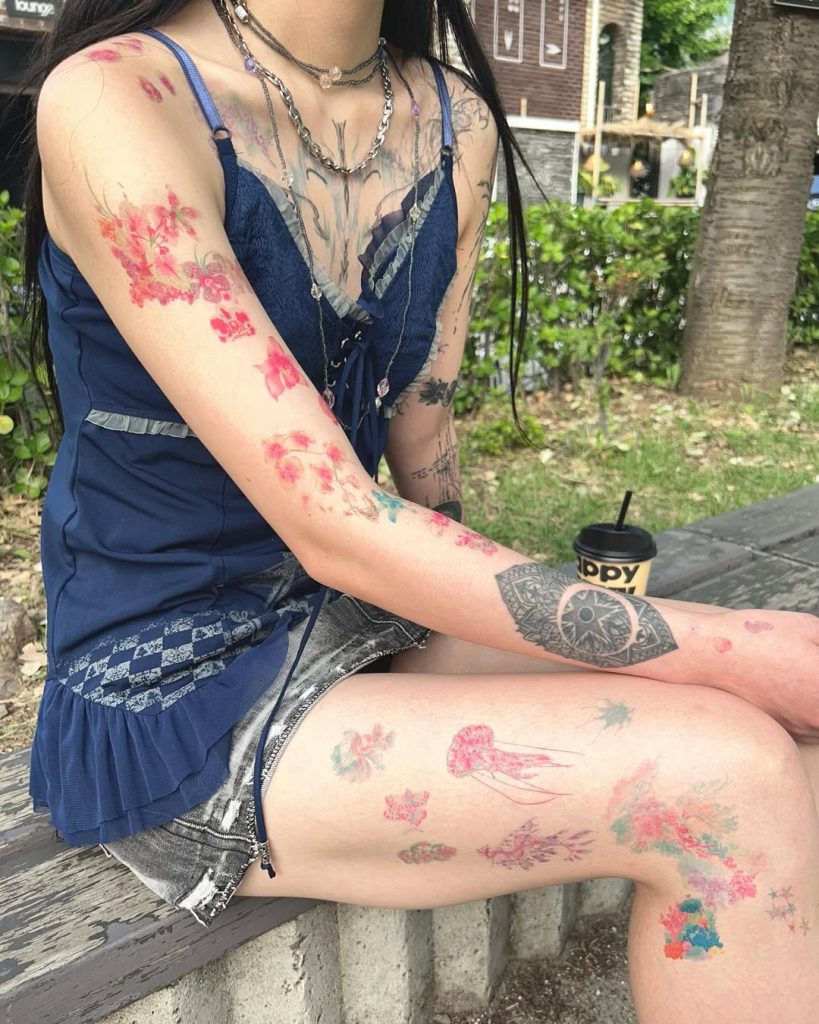
Temporary tattoo stickers are stickers that imitate tattoos by applying them to the skin. The most common type is applied using water, and they can last from several days up to a few weeks.
They are suitable for people who want to enjoy tattoos casually or try out a design first. Today, they are used by a wide range of ages as fashion items and as part of self-expression.
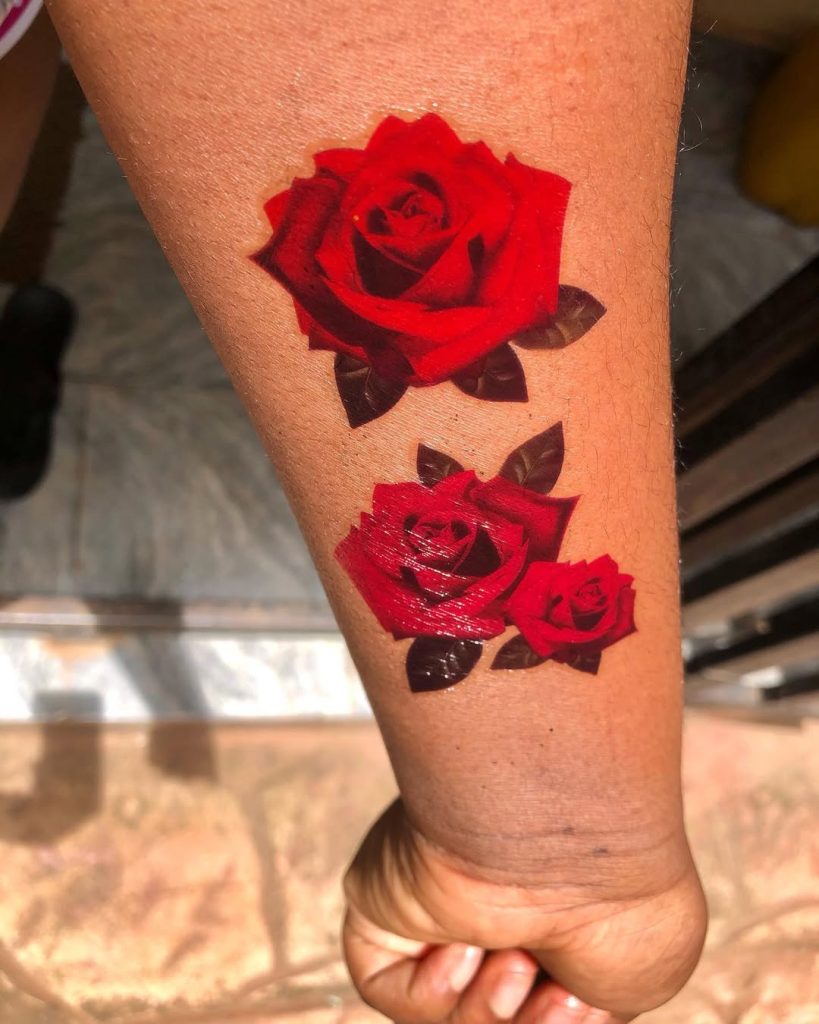
In the 1890s, temporary tattoo stickers appeared in the United States as bonuses included with chewing gum. At that time, the stickers were very simple and became popular as children’s toys.
By the mid-20th century, tattoo stickers spread further, and designs featuring characters from movies, anime, and manga appeared. They were mainly loved as items for children and teenagers.
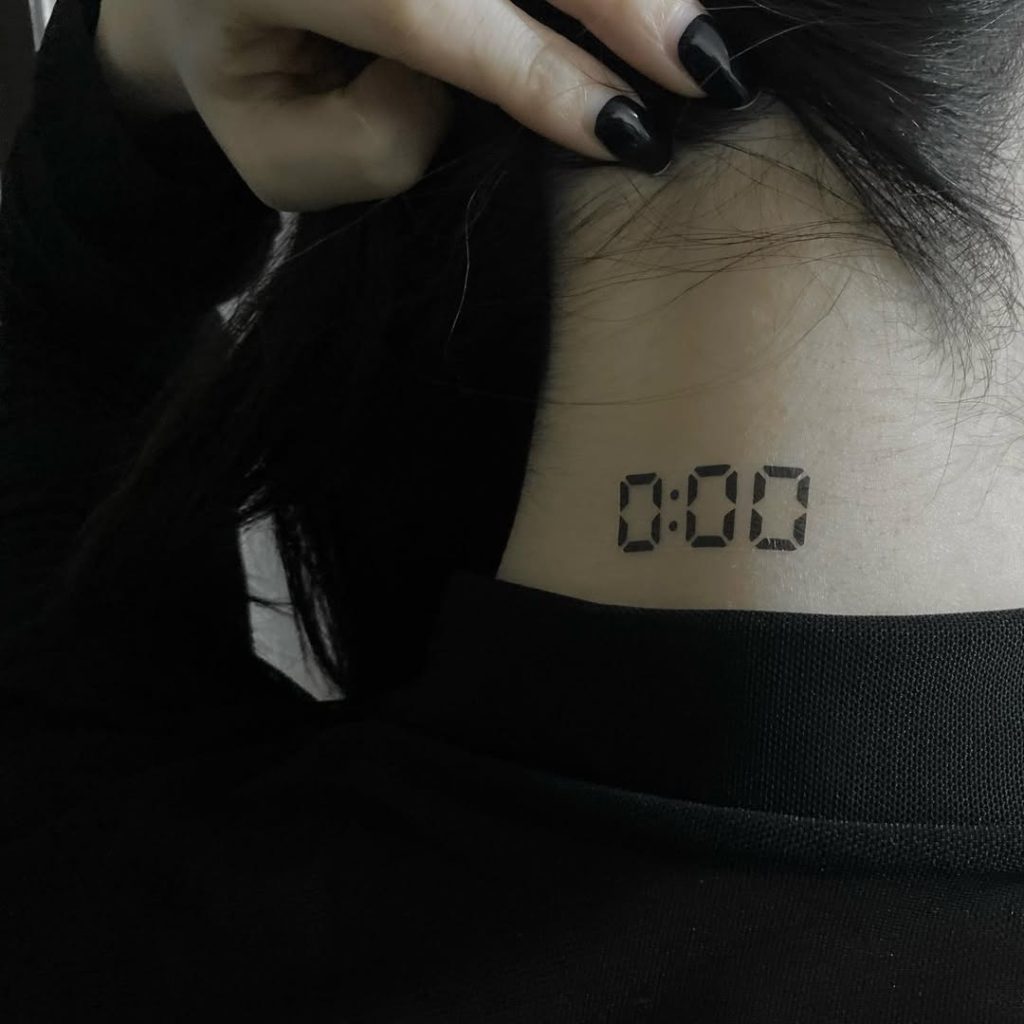
From the 2000s onward, adult-oriented designs and higher-quality materials were developed, and tattoo stickers gained attention as accessories and fashion items for events. In particular, metallic and glitter designs became popular at festivals and parties.
To apply, you typically only need water or a damp cloth to easily transfer it onto the skin. To remove, it can usually be wiped off easily using soap or alcohol.
Some manufacturers offer services that let you create custom temporary tattoo stickers from original designs, making it possible to order special designs for individuals or events.